Craftsman
c. 1905–c. 1930 · Modern period
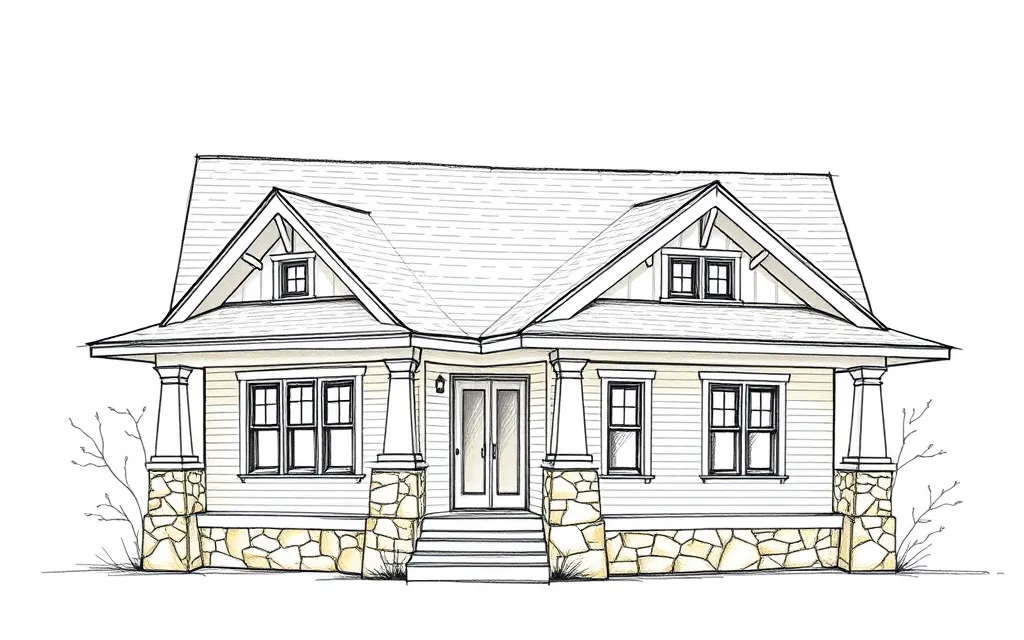
Low-pitched gabled houses with wide eaves, exposed rafter tails, triangular knee braces, and a deep front porch on tapered square columns over brick or stone piers.
Description
Craftsman houses, most often one-and-a-half-story bungalows, celebrate simple, honest construction. Roofs are low-pitched and gabled, with wide eaves where the rafter ends are left exposed, and triangular knee braces under the gables.
The front porch is the heart of the house: deep, under the main roof or its own gable, and supported on short tapered square columns standing on brick, stone or shingled piers. Walls mix wood shingles, clapboard, stucco, brick and river stone, and windows often have several vertical panes in the upper sash.
Key characteristics
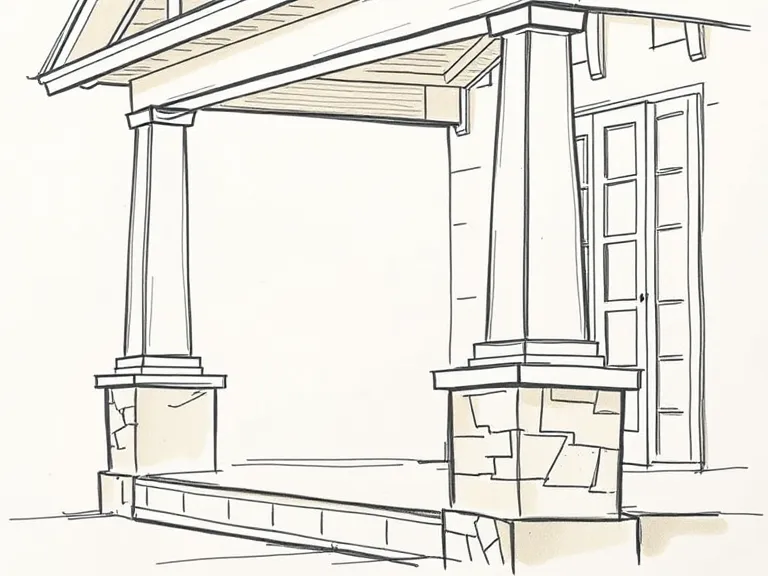
Tapered porch columns
Short, tapered square columns on heavy brick, stone or shingled piers.
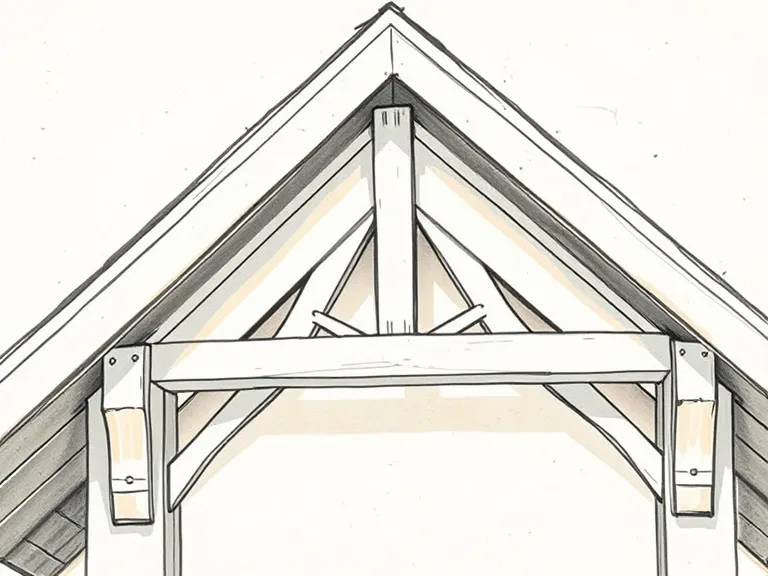
Exposed rafters and braces
Rafter tails left visible under wide eaves, and triangular knee braces in the gables.
Low-pitched gables
Gabled roofs of low pitch, often a front gable over the porch.
Deep front porch
A full- or partial-width porch, often under the main roof.
Mixed natural materials
Shingles, clapboard, river rock, clinker brick and stucco.
Upper-sash pattern
Double-hung windows with three or four vertical panes over one.
Where you'll find it
- Pasadena CA
- Bungalow Heaven, Pasadena CA
- North Park, San Diego CA
- Ballard, Seattle WA
- Sellwood, Portland OR
- Berkeley CA
- Chicago Bungalow Belt IL
- Hyde Park, Austin TX
On history.house so far: Sacramento (1).
History and context
The Craftsman style grew from the English Arts and Crafts movement and was named after Gustav Stickley's magazine The Craftsman (1901–1916), which published house plans. In Pasadena, the brothers Charles and Henry Greene designed exquisite Craftsman houses such as the Gamble House (1908).
Magazines, plan books and kit-house companies such as Sears made the Craftsman bungalow the most popular small house in the country from about 1905 to the mid-1920s. The same style inspired Australia's California Bungalow.
Craftsman homes on history.house
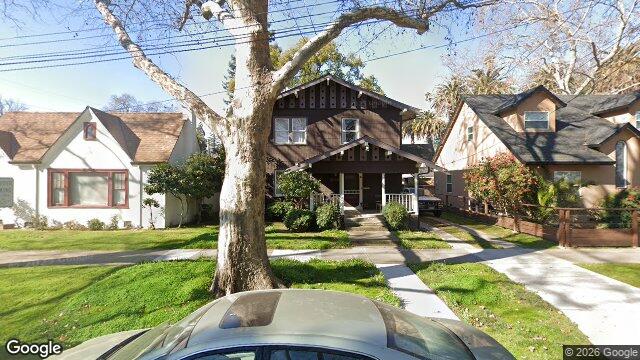
1 home identified as Craftsman from their style analysis.
Style names and periods follow Virginia Savage McAlester, A Field Guide to American Houses (1984; revised 2013). Sketches are illustrations generated for this guide, not photographs of real houses.