Two-flat
c. 1890–c. 1930 · Early apartments period
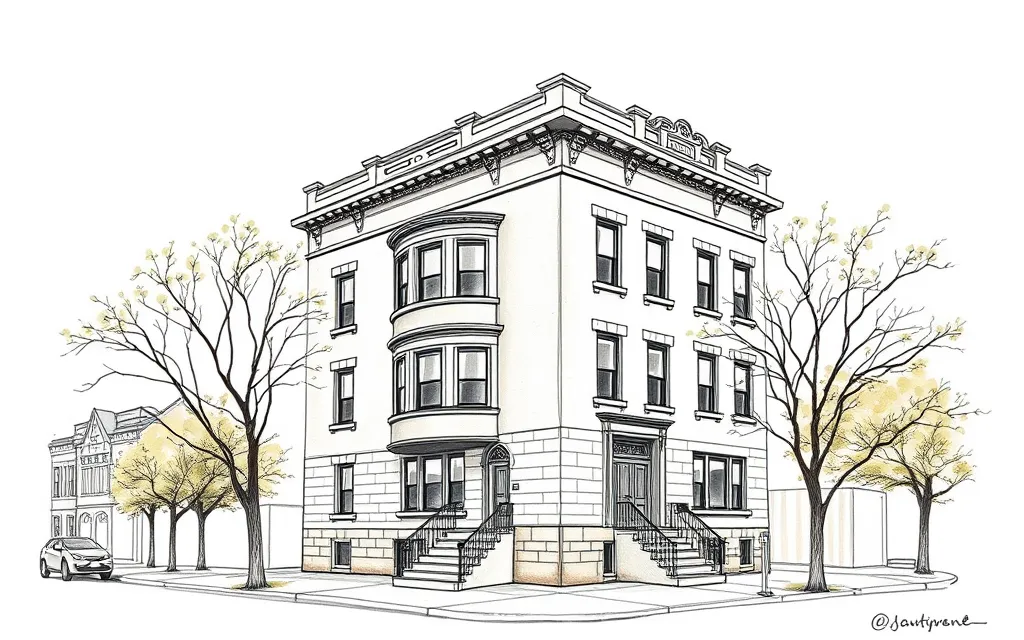
Two-story buildings with one apartment on each floor, often with a limestone 'greystone' front, a raised basement and a bay window, typical of Chicago and other Midwest cities.
Description
A two-flat has two apartments stacked one above the other, each taking up a whole floor, with a shared entrance and stair. Most stand on narrow city lots with a raised basement, a short flight of steps to the front door and often a bay window rising through both floors. Three-flats add a third floor.
Chicago's 'greystones' have fronts of grey Indiana limestone with carved detail, while others are of red or buff brick. Owners often lived in one flat and rented out the other, which helped working families buy a home.
Key characteristics
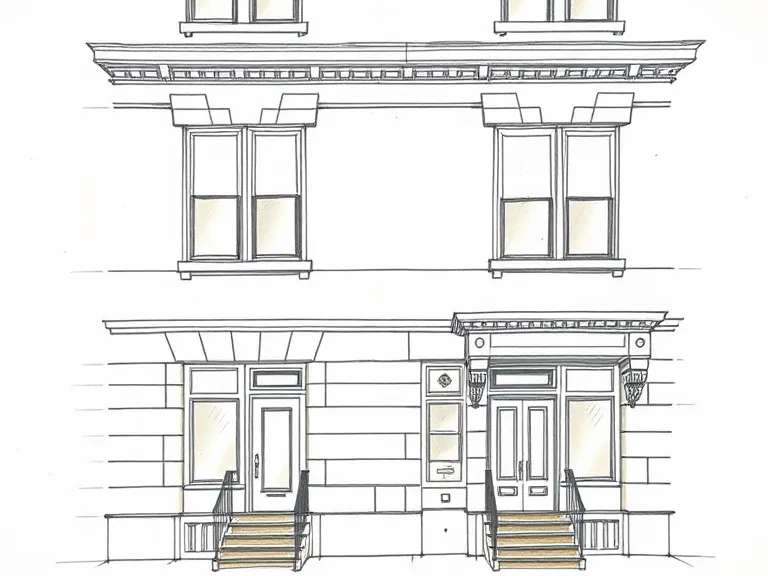
Stacked flats
One apartment on each floor, with a shared entrance and stair.
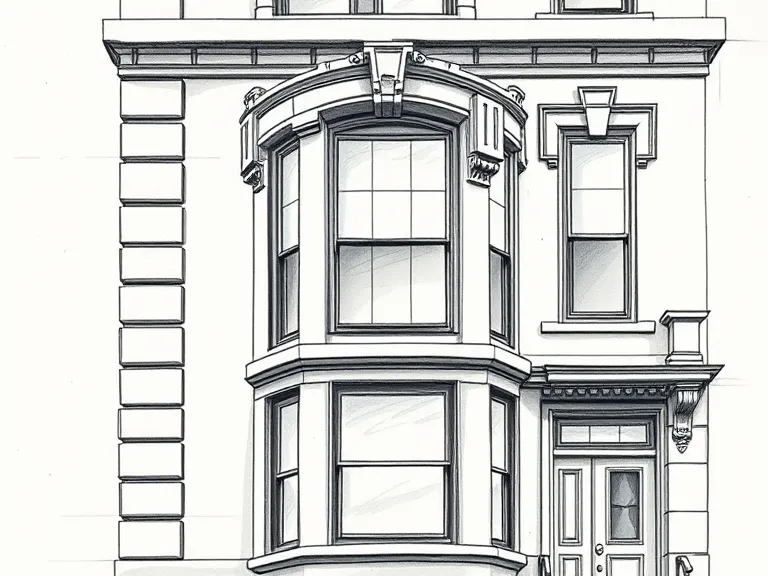
Limestone front
A front of grey limestone, or of red or buff brick with stone trim.
Raised basement
A half-sunken basement and a short flight of front steps.
Bay window
A two-story bay window, often rounded or angled.
Back porches
Stacked wooden porches and stairs at the rear.
Where you'll find it
- Logan Square, Chicago IL
- Pilsen, Chicago IL
- Lincoln Square, Chicago IL
- North Lawndale, Chicago IL
- Tower Grove South, St. Louis MO
- Bay View, Milwaukee WI
History and context
The two-flat spread through Chicago's fast-growing neighborhoods after the fire of 1871 and the growth of its streetcar network. Built by the thousands for immigrant and working families, it let an owner live in one flat and pay the mortgage with rent from the other.
Similar stacked flats were built in St. Louis, Milwaukee and other Midwest cities. Two-flats remain a large share of Chicago's housing, and many have been restored or converted into single-family homes.
Two-flat homes on history.house
No homes have been identified in this style yet. Identify your home's style from a photo, or search for an address.
Sources: Virginia Savage McAlester, A Field Guide to American Houses (1984; revised 2013); National Park Service, National Register of Historic Places nominations and multiple property documentation; Elizabeth Collins Cromley, Alone Together: A History of New York's Early Apartments (1990). Sketches are illustrations generated for this guide, not photographs of real buildings.