Courtyard Apartments
c. 1910–c. 1940 · Early apartments period
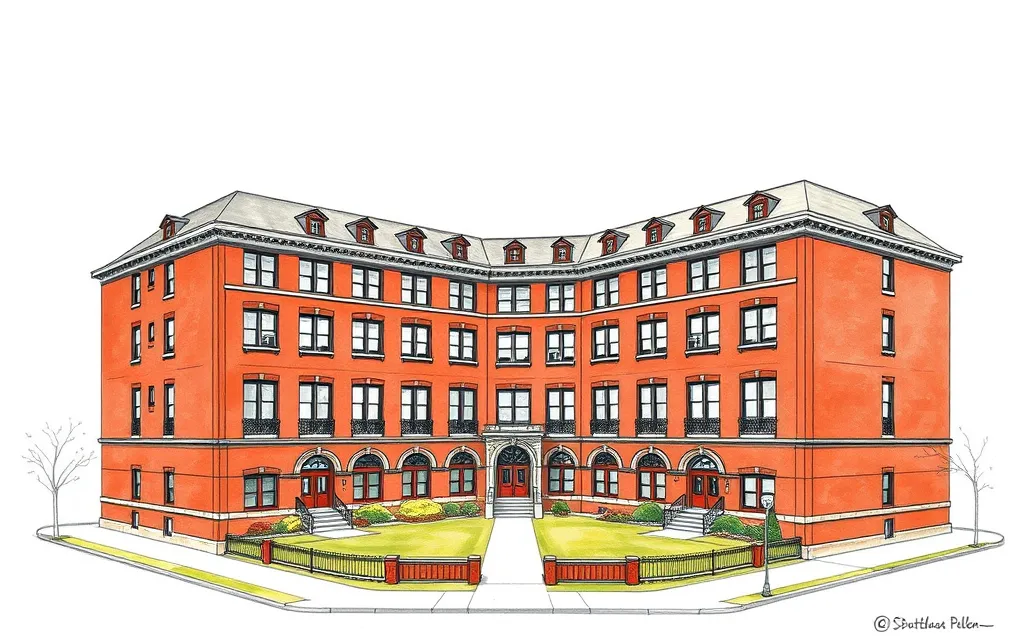
U-shaped apartment buildings or groups of bungalows arranged around a landscaped courtyard open to the street.
Description
Courtyard apartments wrap around a landscaped court that opens to the street, so every apartment gets light and air and a garden outlook. In Chicago and other Northern cities they are three-story brick buildings with several entrances off the court, each leading to a stair serving a few apartments.
In Southern California the same idea took the form of the bungalow court: a group of small cottages, or attached one- and two-story units, set around a central garden path. These were built in the popular styles of the day, especially Spanish Colonial Revival and Craftsman.
Key characteristics
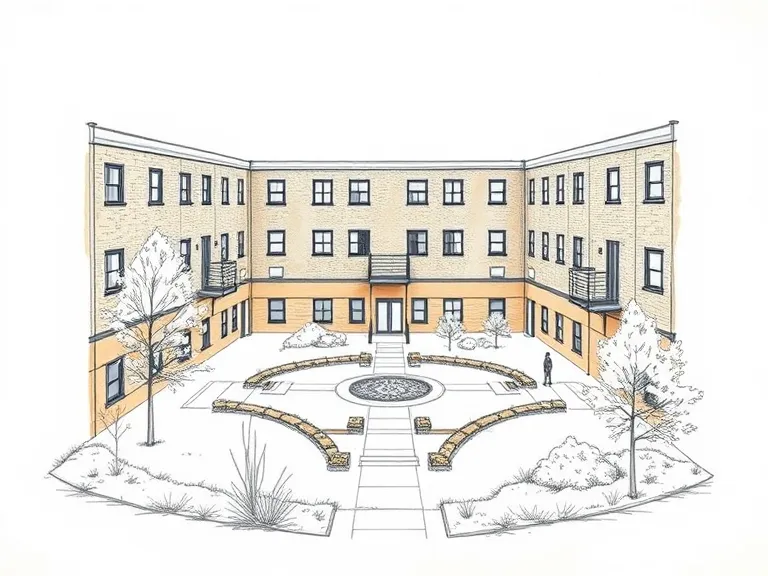
Central court
A landscaped courtyard opening to the street, with paths to each entrance.
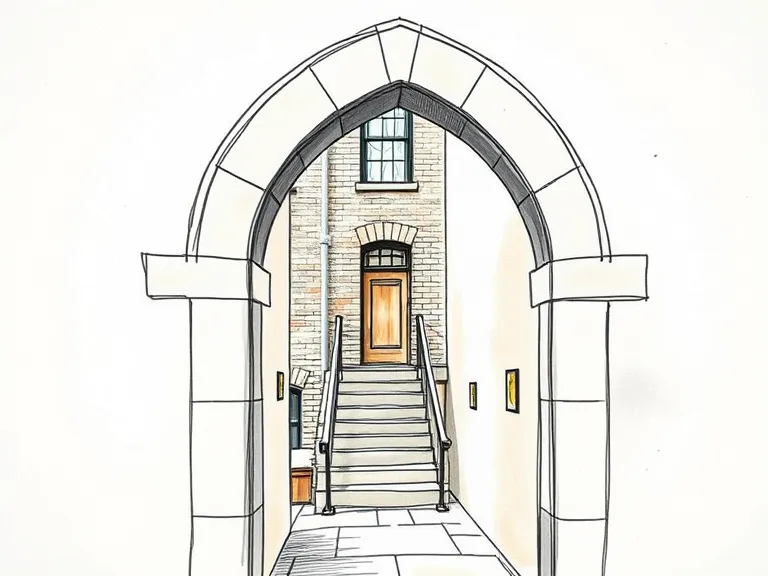
Several entrances
Separate entrances around the court, each with its own stair.
U-shaped plan
Wings on three sides of the court, often symmetrical.
Period detail
Tudor, Spanish or Classical detail on the entrances and parapets.
Low height
Two or three stories, keeping the court sunny.
Where you'll find it
- Rogers Park, Chicago IL
- Edgewater, Chicago IL
- Hyde Park, Chicago IL
- Pasadena CA
- Hollywood, Los Angeles CA
- West Hollywood CA
- Capitol Hill, Seattle WA
History and context
Courtyard buildings answered criticism of dark, crowded tenements. Built along the streetcar and elevated lines of Chicago and other cities in the 1910s and 1920s, they offered apartment living with some of the light and greenery of a suburban house.
The bungalow court is usually traced to Pasadena around 1909, and it spread across Los Angeles as the city boomed in the 1920s. Many cities later zoned against it, and both kinds are now valued as some of the most livable early apartment buildings.
Courtyard Apartments homes on history.house
No homes have been identified in this style yet. Identify your home's style from a photo, or search for an address.
Sources: Virginia Savage McAlester, A Field Guide to American Houses (1984; revised 2013); National Park Service, National Register of Historic Places nominations and multiple property documentation; Elizabeth Collins Cromley, Alone Together: A History of New York's Early Apartments (1990). Sketches are illustrations generated for this guide, not photographs of real buildings.