Stick
c. 1860–c. 1890 · Victorian period
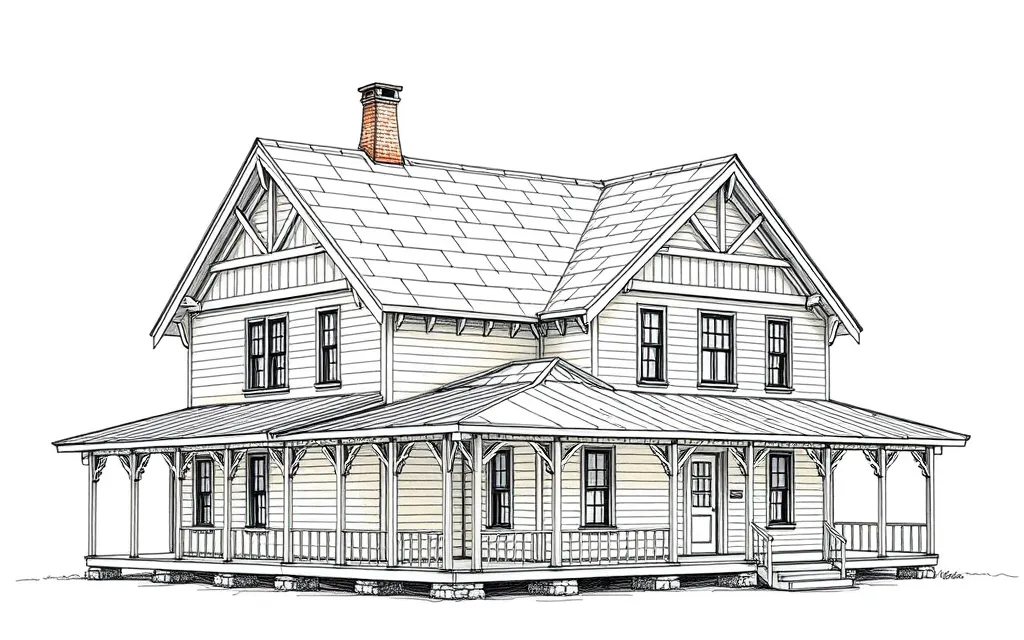
Tall wooden houses with steep gables and patterns of flat boards (stickwork) applied over the siding to suggest the frame inside, plus diagonal braces under the eaves.
Description
Stick-style houses express their timber construction on the outside. Flat boards run horizontally, vertically and diagonally across the walls, dividing them into panels that echo the half-timbering of medieval houses, but are purely decorative.
They are tall and angular, with steep gable roofs, overhanging eaves supported by large diagonal brackets and simple truss work in the gable peaks. Porches have diagonal or curved braces between the posts.
Key characteristics
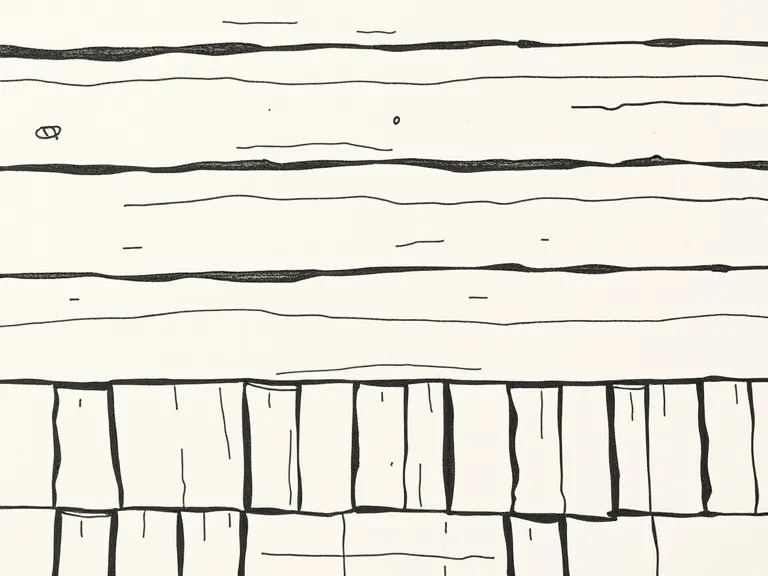
Stickwork
Flat boards laid over the siding in square, rectangular and diagonal patterns.
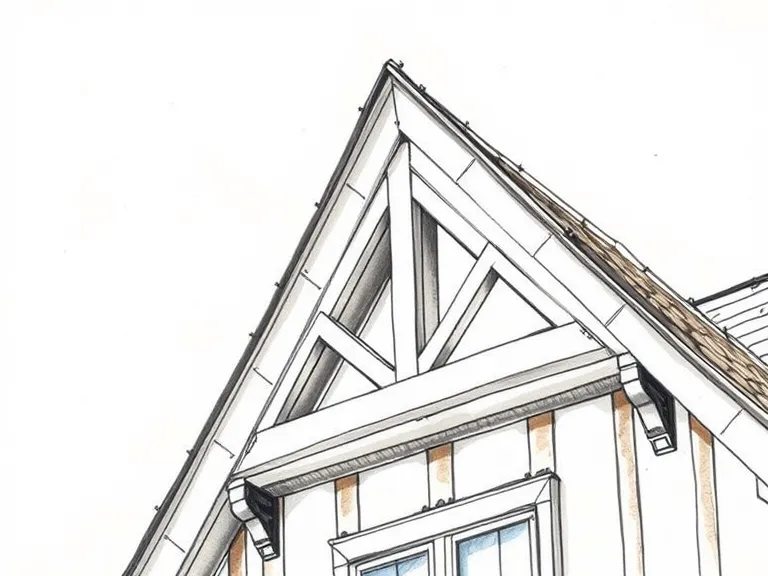
Gable trusses
Decorative trusses or braces in the peaks of the gables.
Steep gables
Steeply pitched, cross-gabled roofs with overhanging eaves.
Diagonal braces
Large angled brackets supporting the eaves and porch roofs.
Mixed siding
Panels of clapboard, vertical boards and shingles within the stickwork.
Where you'll find it
- Cape May NJ
- Newport RI
- Hayes Valley, San Francisco CA
- Pacific Heights, San Francisco CA
- Oak Bluffs, Martha's Vineyard MA
- Eureka CA
History and context
Stick grew out of the Gothic cottages of Andrew Jackson Downing and the pattern books of the 1860s, which argued that a wooden house should honestly show its frame. Richard Morris Hunt's Griswold House (1863) in Newport is a celebrated early example.
It was a style of the seaside resorts and the growing suburbs of the Northeast, and of San Francisco, where it merged with the Italianate to produce the bay-windowed Stick-Eastlake rowhouses of the 1880s. It led directly to the Queen Anne and Shingle styles.
Stick homes on history.house
No homes have been identified in this style yet. Identify your home's style from a photo, or search for an address.
Style names and periods follow Virginia Savage McAlester, A Field Guide to American Houses (1984; revised 2013). Sketches are illustrations generated for this guide, not photographs of real houses.