Queen Anne
c. 1880–c. 1910 · Victorian period
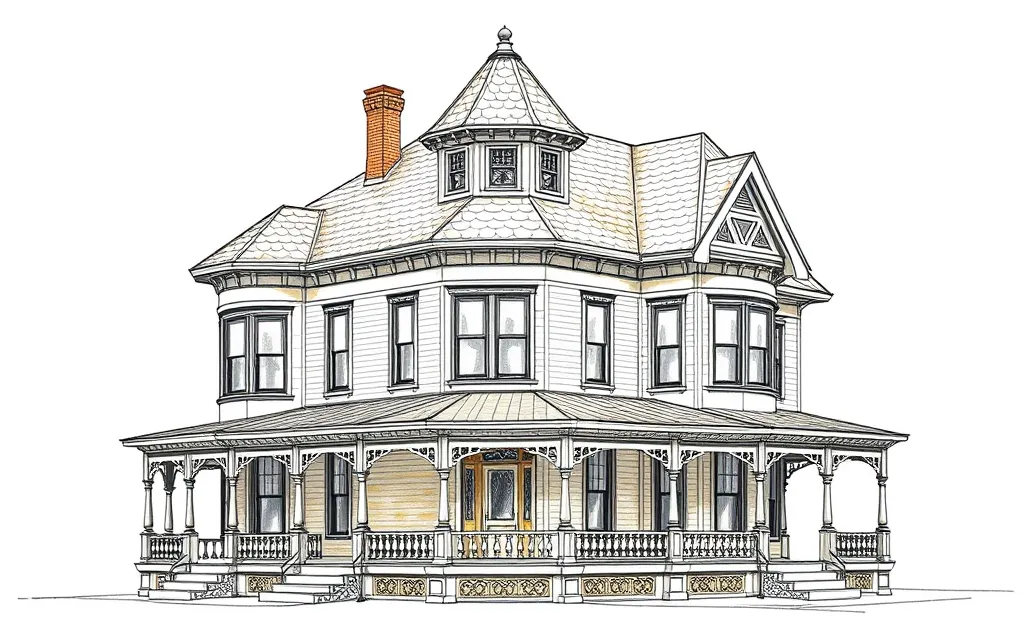
Asymmetrical, richly decorated houses with steep irregular roofs, a round or polygonal tower, wraparound porches, and a mix of shingle patterns, spindles and textures.
Description
Queen Anne is what most people picture as a Victorian house. It is deliberately irregular, with a steep roof of several intersecting gables, projecting bays, overhangs and, often, a round or polygonal corner tower with a conical roof.
Walls avoid plain surfaces, mixing clapboards with bands of decorative shingles in fish-scale and other shapes. A one-story porch wraps around one or both sides, trimmed with turned posts, spindlework friezes and brackets. Later examples swap the spindles for classical columns.
Key characteristics
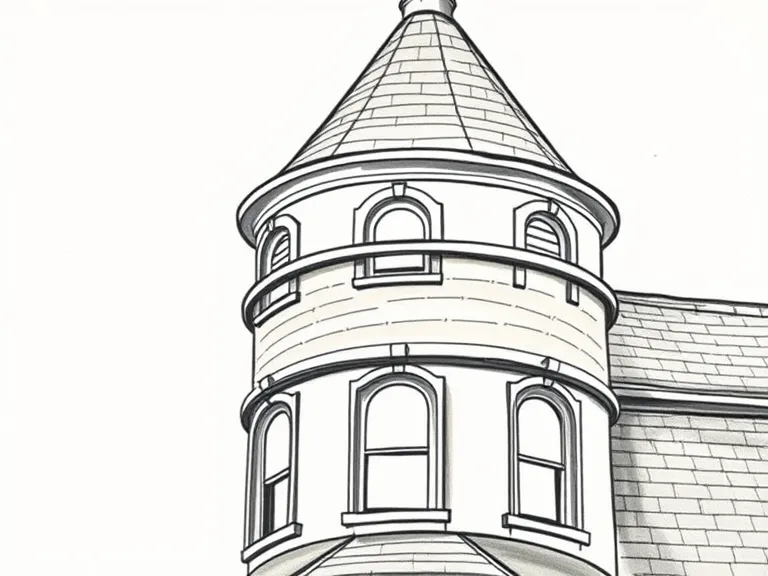
Corner tower
A round or polygonal tower at a front corner, capped with a conical or pyramidal roof.
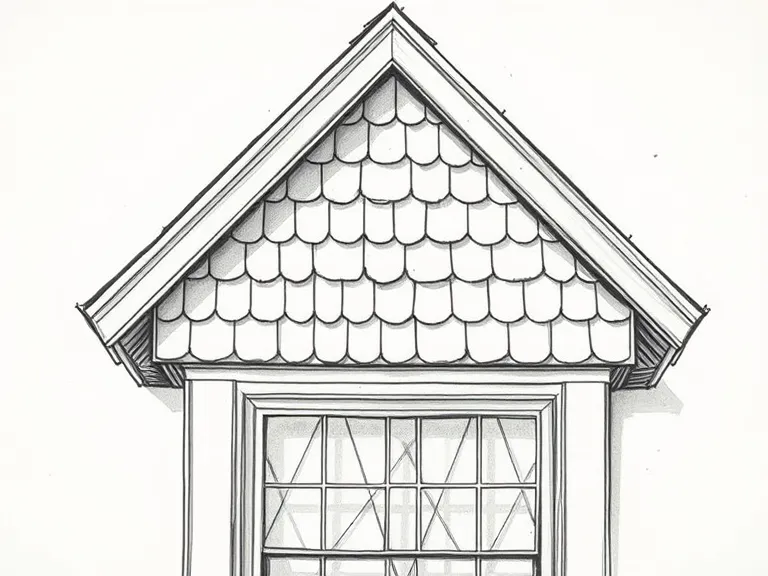
Patterned shingles
Bands of fish-scale, diamond and other cut shingles in the gables and upper walls.
Wraparound porch
A one-story porch extending across the front and around a side, with turned posts and spindlework.
Irregular roof
A steep roof with a dominant front-facing gable and several cross gables.
Bay windows
Projecting bays, oriels and overhangs breaking up the walls.
Decorative color
Several paint colors picking out trim, panels and shingles.
Where you'll find it
- Queen Anne, Seattle WA
- Haight-Ashbury, San Francisco CA
- Old Louisville KY
- Cape May NJ
- Oak Park IL
- Eureka CA
- Ditmas Park, Brooklyn NY
- Galveston TX
History and context
The name comes from English architects such as Richard Norman Shaw, who in the 1860s and 1870s designed picturesque houses drawing on late medieval and early 1700s buildings, the era of Queen Anne. The British government buildings at the 1876 Philadelphia Centennial Exhibition introduced the style to Americans.
In America it was built mostly in wood, and the railroad carried precut trim, doors and windows from factories to building sites across the country. Queen Anne was the most popular style for houses from about 1880 to 1900, filling the streetcar suburbs of almost every town.
Queen Anne homes on history.house
No homes have been identified in this style yet. Identify your home's style from a photo, or search for an address.
Style names and periods follow Virginia Savage McAlester, A Field Guide to American Houses (1984; revised 2013). Sketches are illustrations generated for this guide, not photographs of real houses.