Second Empire
c. 1855–c. 1885 · Victorian period
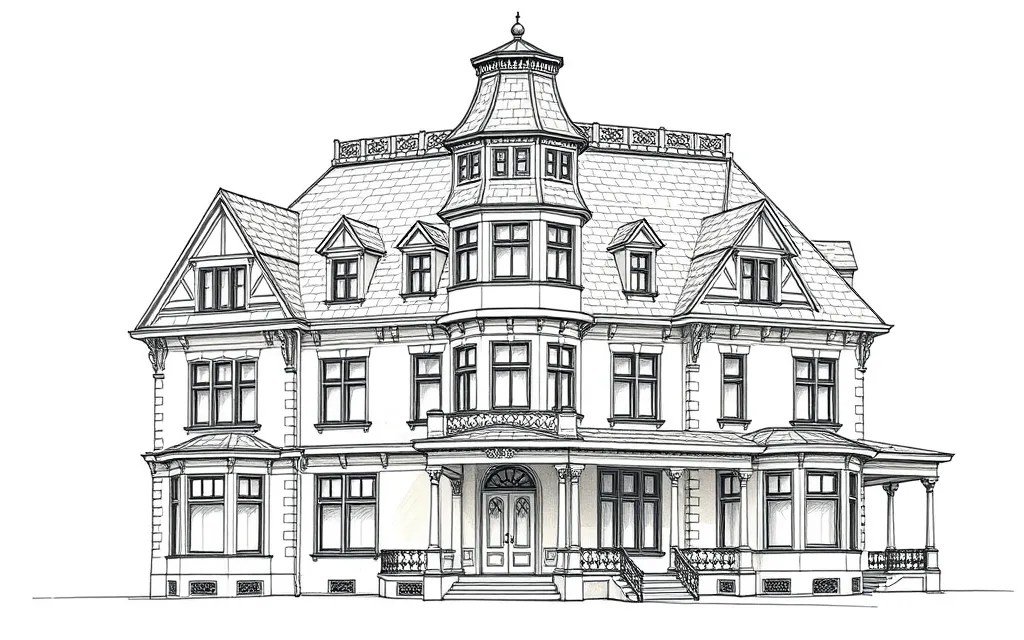
Houses topped with a mansard roof, steep on all four sides and pierced with dormer windows, with Italianate-style brackets and window hoods below.
Description
The mansard roof is the defining feature of Second Empire houses: a double-pitched roof with a very steep, almost vertical lower slope on all four sides and a nearly flat top. Dormer windows in the steep slope make the attic a full extra story.
Below the roof, Second Empire houses look much like Italianate ones, with deep eaves on decorative brackets, tall windows with molded hoods and one-story porches. The roof slope may be straight, curved outward or inward, and is often covered with patterned slate in bands of color.
Key characteristics
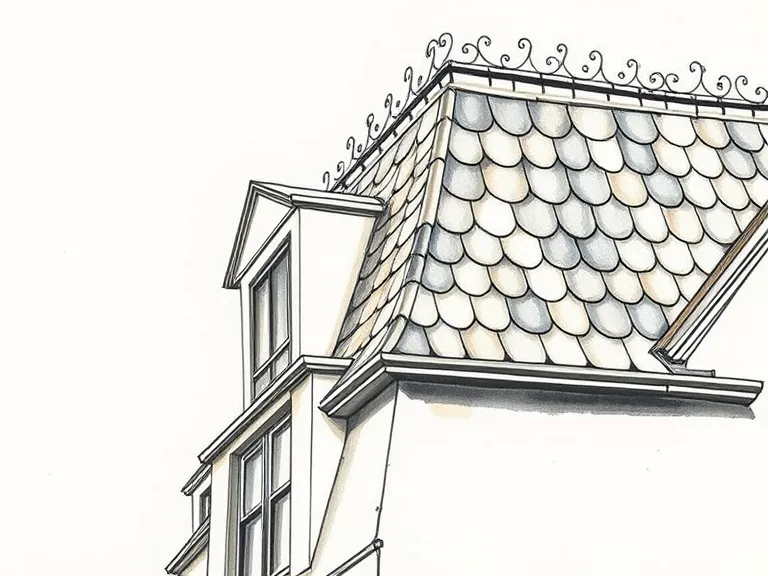
Mansard roof
A steep double-pitched roof on all four sides, so the attic becomes a full story.
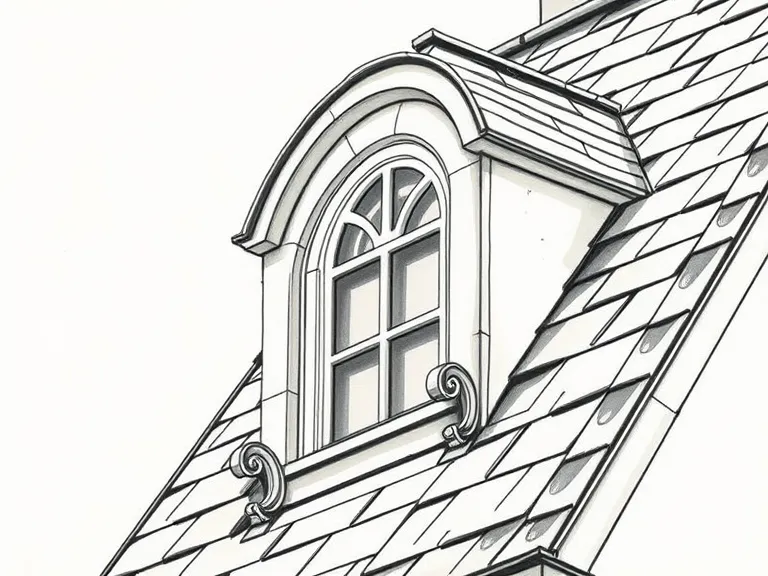
Dormer windows
Ornate dormers set into the steep lower slope, often with arched or pedimented tops.
Patterned slate
Slate laid in bands of different shapes and colors across the roof slope.
Bracketed cornice
Decorative brackets under the eaves, as on Italianate houses.
Central tower
On larger houses, a square tower with its own mansard cap.
Iron cresting
Decorative cast-iron cresting along the top edge of the roof.
Where you'll find it
- South End, Boston MA
- Back Bay, Boston MA
- Cape May NJ
- Mount Vernon Place, Baltimore MD
- Old Louisville KY
- Lafayette Square, St. Louis MO
History and context
The style is named after the Second Empire of Napoleon III (1852–1870), when Baron Haussmann rebuilt Paris with mansard-roofed boulevards. Americans visiting the Paris exhibitions of 1855 and 1867 brought the fashion home, and it was seen as up to date and cosmopolitan.
Second Empire was used for public buildings of the Grant administration as well as houses, and was especially popular in the Northeast and Midwest in the 1860s and 1870s. A mansard roof also gave a full top floor without adding a story, which suited rowhouses and boarding houses in crowded cities.
Second Empire homes on history.house
No homes have been identified in this style yet. Identify your home's style from a photo, or search for an address.
Style names and periods follow Virginia Savage McAlester, A Field Guide to American Houses (1984; revised 2013). Sketches are illustrations generated for this guide, not photographs of real houses.