Italianate
c. 1840–c. 1885 · Romantic period
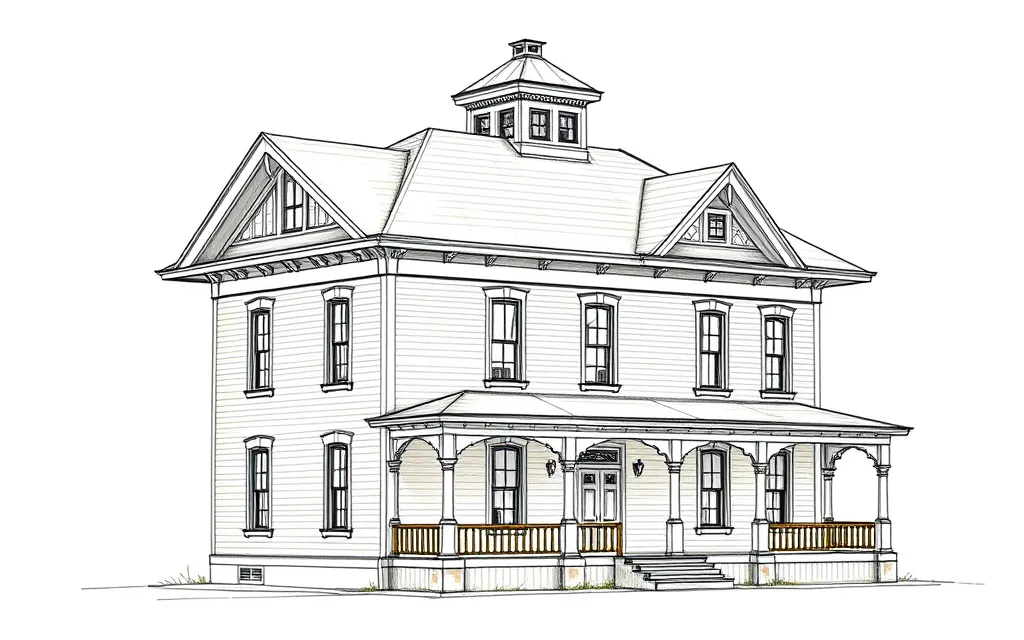
Tall, square houses with a low-pitched roof and wide overhanging eaves supported by decorative brackets, tall narrow windows with heavy hoods, and often a square cupola.
Description
Italianate houses are modeled on the rambling farmhouses and villas of northern Italy, as seen through English picturesque eyes. Most are two or three stories with a low-pitched hipped roof, deep eaves and pairs of large, ornate brackets underneath.
Windows are tall and narrow, often with arched or curved tops, and topped with elaborate hoods or crowns. Many houses have a square cupola or a tower, and a one-story porch. In cities, the same brackets and window hoods decorate thousands of brick and brownstone rowhouses.
Key characteristics
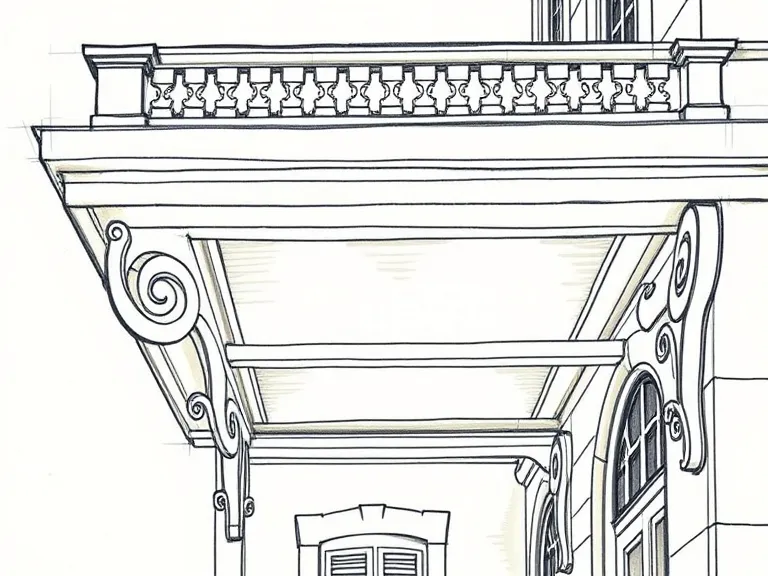
Bracketed eaves
Wide overhanging eaves with large decorative brackets, often in pairs.
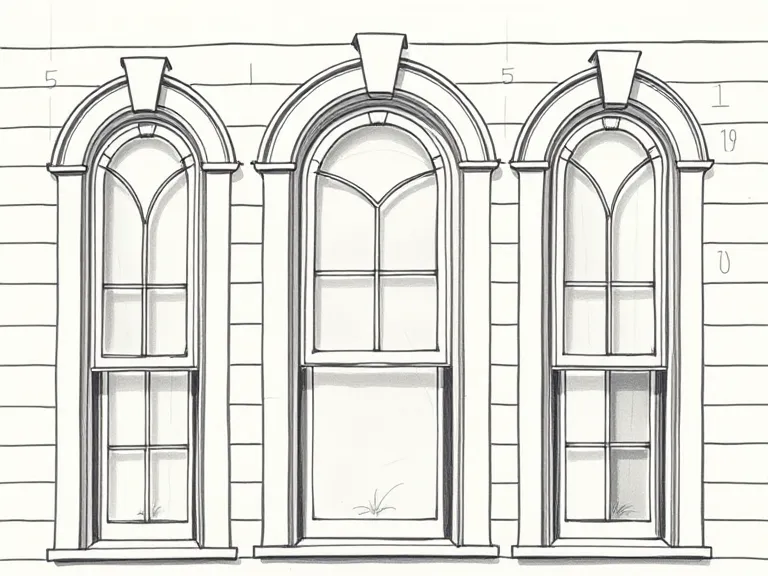
Tall arched windows
Tall, narrow windows, often with rounded or segmental tops and heavy molded hoods.
Low-pitched roof
A low hipped roof, sometimes nearly flat on city houses.
Cupola or tower
A square cupola on the roof or a tower at the corner of grander houses.
Square, upright form
A tall, boxy house, often two or three stories.
Double doors
Paired front doors, often with arched glass panels.
Where you'll find it
- Alamo Square, San Francisco CA
- Galena IL
- Over-the-Rhine, Cincinnati OH
- Old Louisville KY
- Savannah GA
- Columbus WI
- Brooklyn Heights NY
History and context
Andrew Jackson Downing's pattern books of the 1840s promoted the Italian villa as a picturesque alternative to Greek temples, and by the 1860s Italianate was the most popular house style in the country. It suited both expensive villas and modest houses, and new cast-iron and pressed-metal trim made brackets and hoods affordable.
Italianate was at its height in the fast-growing towns of the Midwest and in San Francisco, where builders lined whole streets with bay-windowed Italianate rowhouses. The Panic of 1873 slowed building, and by the 1880s fashion had moved on to Queen Anne.
Italianate homes on history.house
No homes have been identified in this style yet. Identify your home's style from a photo, or search for an address.
Style names and periods follow Virginia Savage McAlester, A Field Guide to American Houses (1984; revised 2013). Sketches are illustrations generated for this guide, not photographs of real houses.