Shingle
c. 1880–c. 1910 · Victorian period
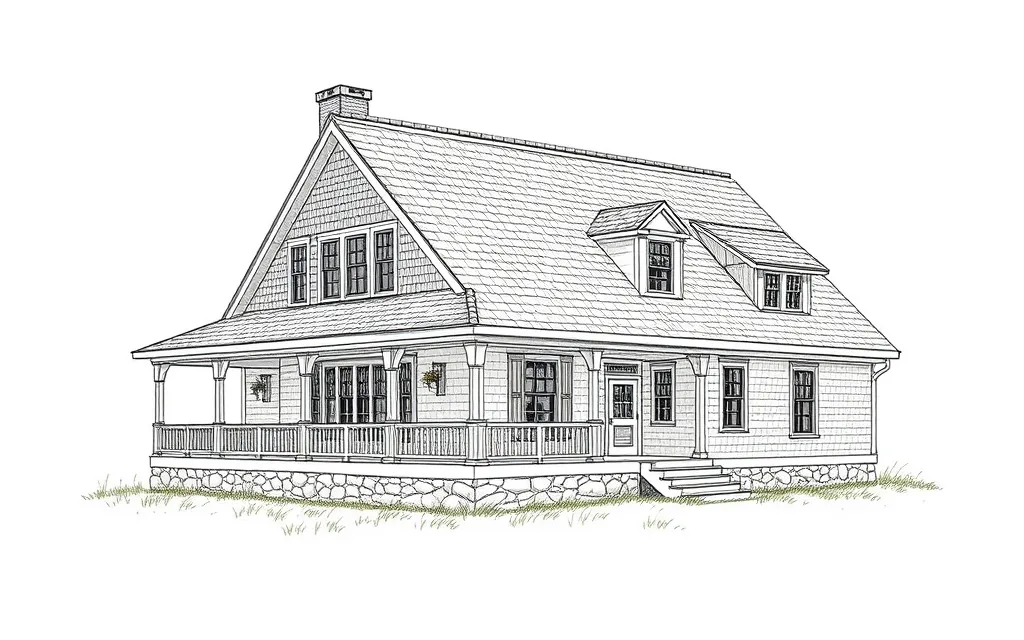
Rambling houses wrapped in a continuous skin of wood shingles over walls and roof, with broad gables, deep porches and little applied decoration.
Description
Shingle-style houses are covered almost entirely in wood shingles, which run without a break over walls, corners, porch posts and roofs. The effect is of one smooth, flowing surface, very different from the busy textures of Queen Anne.
The houses are low and broad with sweeping gable or gambrel roofs, eyebrow dormers, deep shaded porches, and stone bases or porch arches. Windows are often grouped in bands. Ornament is spare, and the shingles weather to a soft silver-gray.
Key characteristics
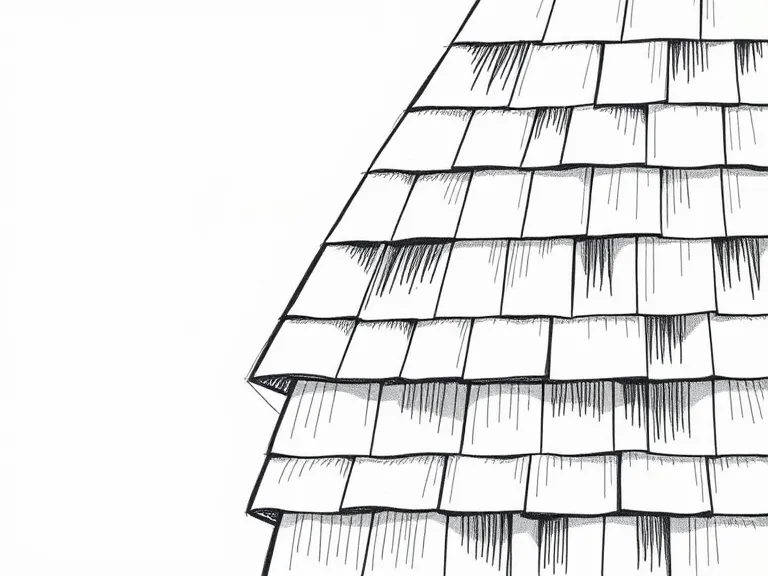
Continuous shingle skin
Wood shingles covering walls and roof without corner boards or breaks.
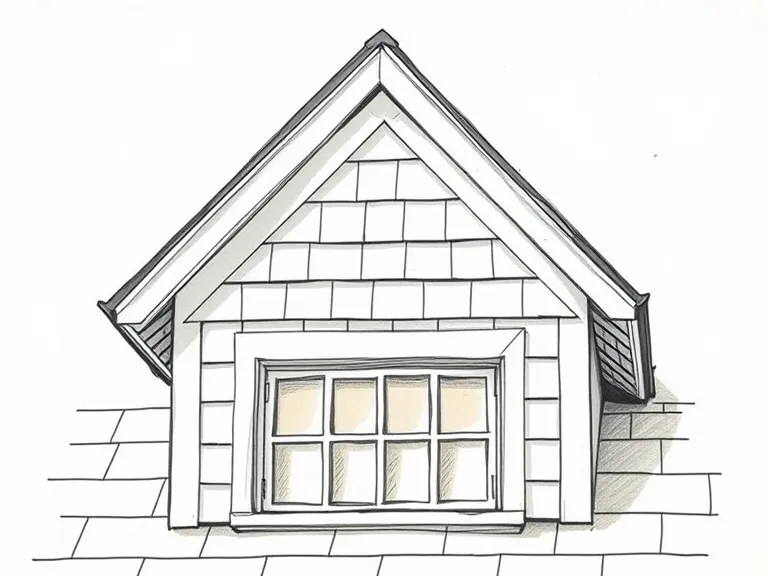
Eyebrow dormer
A low dormer whose roof rises over the window in a gentle wave.
Sweeping roofs
Broad gable or gambrel roofs coming low over the walls.
Deep porches
Wide porches recessed under the main roof, sometimes with rough stone arches.
Banded windows
Windows grouped in rows of two, three or more.
Where you'll find it
Shingle-style houses were mostly built as summer houses for wealthy families on the New England and Long Island coasts, and in a few fashionable suburbs.
- Newport RI
- Bar Harbor ME
- Kennebunkport ME
- Southampton NY
- Shelter Island NY
- Short Hills NJ
History and context
Architects including H. H. Richardson, McKim, Mead & White and William Ralph Emerson developed the Shingle style in the 1880s, combining the shingled farmhouses of colonial New England with the informal planning of English Queen Anne houses. Richardson's Stoughton House (1883) in Cambridge, Massachusetts, is a classic example.
It was an architect's style rather than a builder's, and never spread as widely as Queen Anne. Its influence was lasting, though: Frank Lloyd Wright's own house in Oak Park (1889) is in the Shingle style, and its open plans led toward the Prairie and Craftsman houses that followed.
Shingle homes on history.house
No homes have been identified in this style yet. Identify your home's style from a photo, or search for an address.
Style names and periods follow Virginia Savage McAlester, A Field Guide to American Houses (1984; revised 2013). Sketches are illustrations generated for this guide, not photographs of real houses.