Mission Revival
c. 1890–c. 1920 · Eclectic period
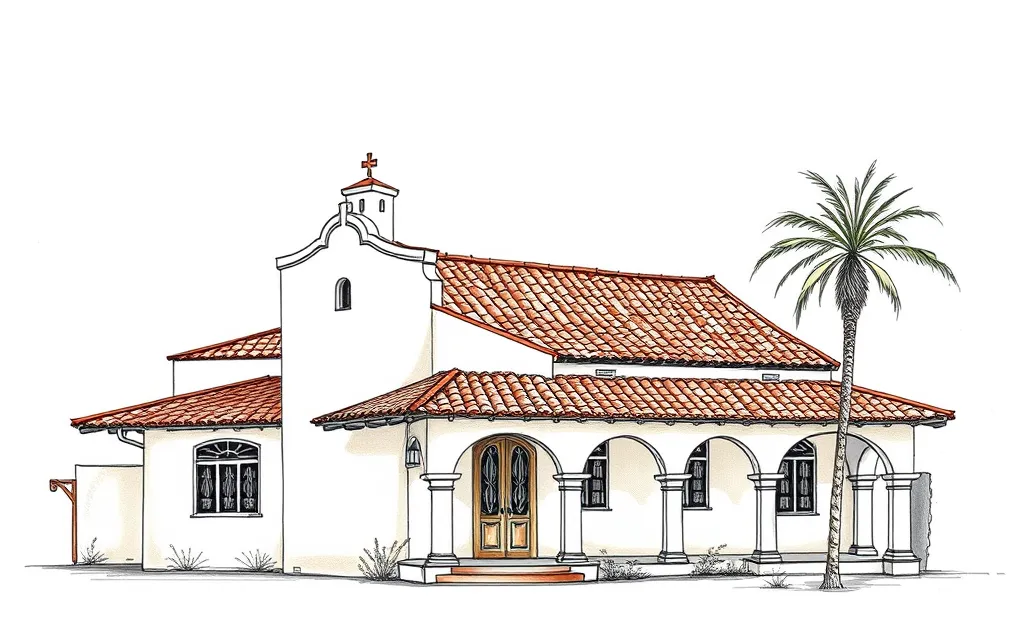
Stucco houses inspired by the Spanish missions of California, with a curved, scalloped parapet, red tile roofs, deep arched porches and plain walls.
Description
Mission Revival houses take their forms from the Franciscan missions founded in California in the 1700s. The signature is a curved or scalloped parapet (a mission-shaped dormer or wall) rising above the roof, often on the front of the house or porch.
Walls are smooth stucco with little decoration. Roofs are usually red clay tile with wide overhangs and exposed rafters, and many houses have an arcaded porch of round arches on square piers. Some have quatrefoil windows or bell-tower-like turrets.
Key characteristics
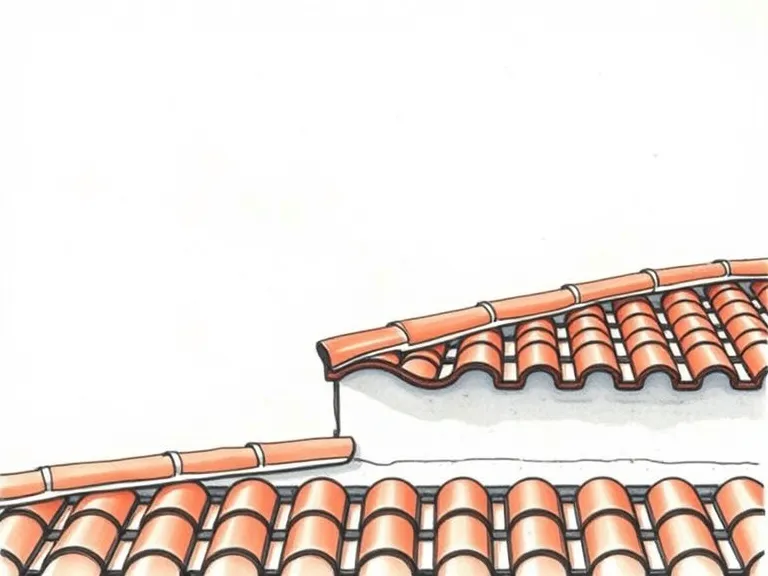
Curved parapet
A scalloped or mission-shaped parapet rising above the roofline or porch.
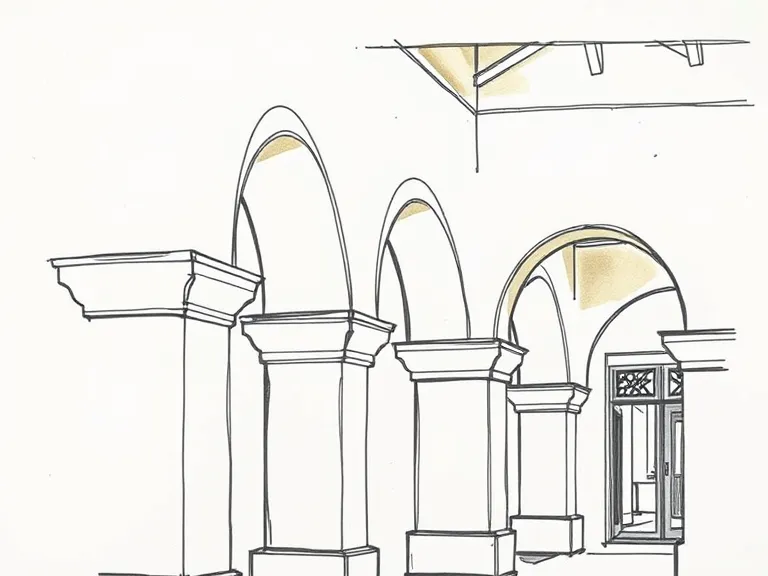
Arched porch
A porch of round arches on heavy square piers.
Red tile roof
Red clay barrel tiles, with wide eaves and exposed rafter ends.
Smooth stucco walls
Plain plastered walls, usually white or cream.
Quatrefoil window
A small decorative window shaped like a four-leaf clover.
Where you'll find it
- Riverside CA
- Pasadena CA
- Redlands CA
- San Antonio TX
- Phoenix AZ
- St. Augustine FL
History and context
Helen Hunt Jackson's novel Ramona (1884) romanticized California's Spanish past, and in the 1890s Californians began building in a style based on the old missions. The California Building at the 1893 Chicago World's Fair spread the fashion nationally, and the Santa Fe and Southern Pacific railroads used it for stations and hotels across the Southwest.
Mission Revival houses are most common in California and the Southwest, but Sears and other catalogs sold them across the country. By the 1920s the style was giving way to the more varied Spanish Colonial Revival.
Mission Revival homes on history.house
No homes have been identified in this style yet. Identify your home's style from a photo, or search for an address.
Style names and periods follow Virginia Savage McAlester, A Field Guide to American Houses (1984; revised 2013). Sketches are illustrations generated for this guide, not photographs of real houses.