Tudor Revival
c. 1890–c. 1940 · Eclectic period
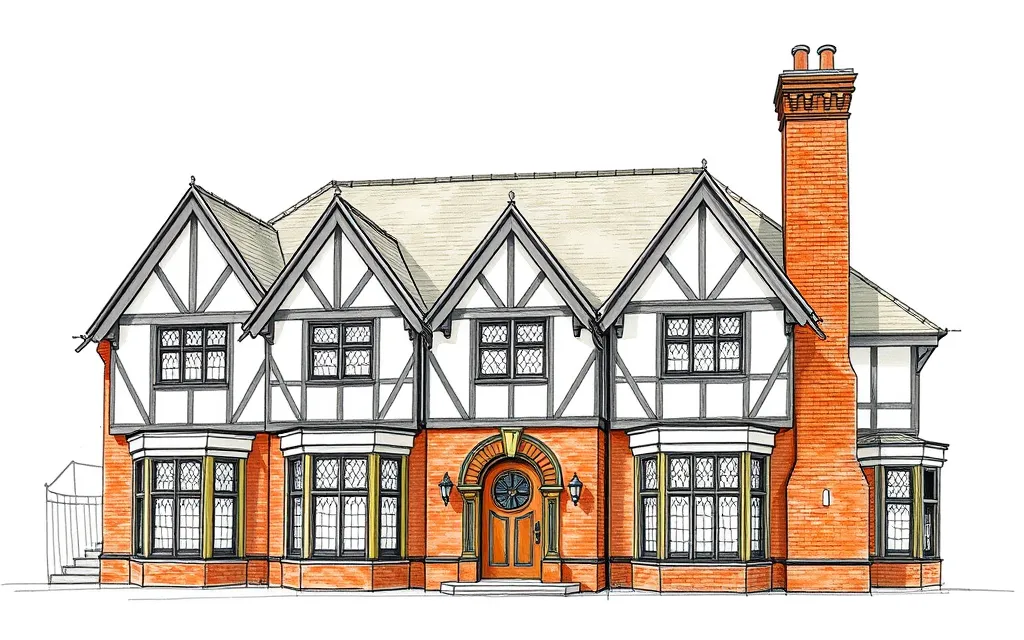
Picturesque houses with steep, overlapping front gables, decorative half-timbering, tall chimneys with decorative pots, and tall narrow windows in groups.
Description
Tudor Revival houses imitate the medieval and Tudor houses of England. The most recognizable feature is the steeply pitched roof, usually with one or more prominent front-facing gables, often overlapping, and a tall, massive chimney placed on the front or side.
Many have decorative half-timbering in the gables or upper floor (dark boards set in stucco), though this is applied decoration, not structure. Walls are brick, stone or stucco, windows are tall and narrow in groups of three or more, often with leaded diamond panes, and doorways are frequently round-arched.
Key characteristics
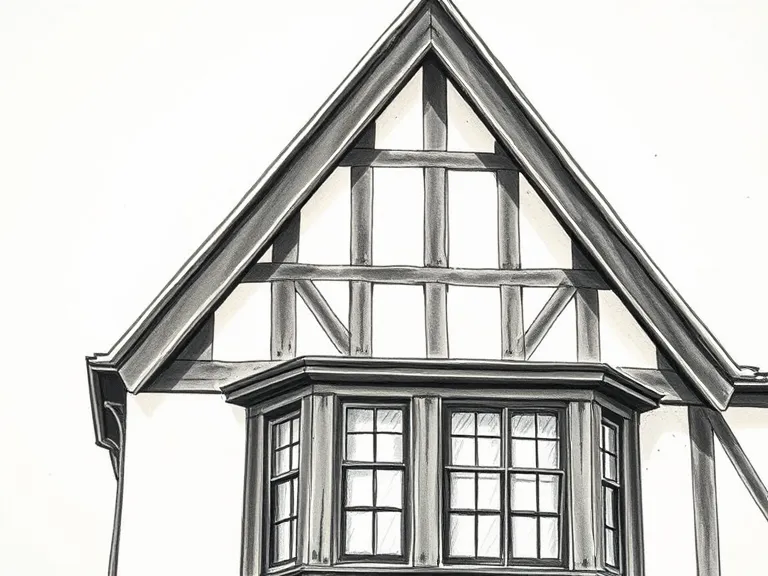
Half-timbering
Dark timber boards set into light stucco, usually in the gables or upper floor.
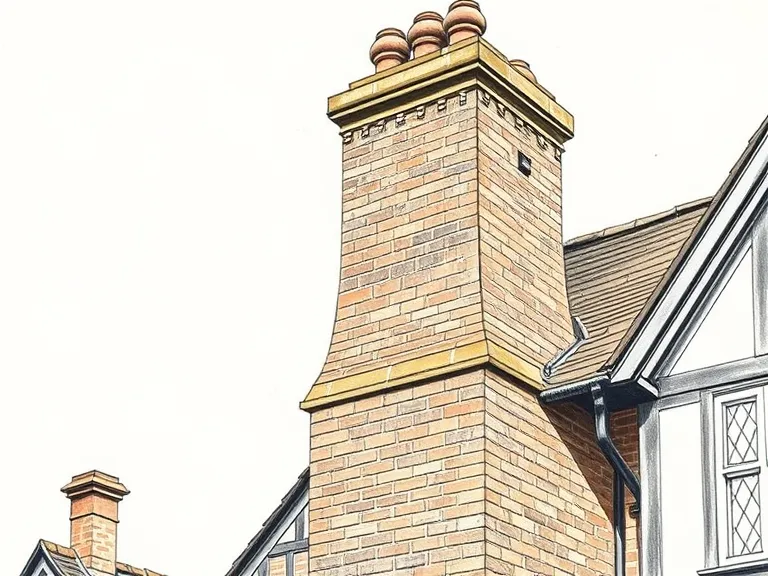
Massive chimney
A tall chimney, often on the front of the house, topped with decorative chimney pots.
Steep front gables
Steep, overlapping gables facing the street, sometimes with a catslide roof.
Grouped windows
Tall, narrow casement windows in groups, sometimes with leaded diamond panes.
Arched doorway
A round or Tudor-arched front door, often of heavy planks.
Mixed materials
Brick, stone and stucco used together on the same wall.
Where you'll find it
- Forest Hills Gardens, Queens NY
- Shaker Heights OH
- Grosse Pointe MI
- Upper Arlington OH
- Edina MN
- Mission Hills KS
- Germantown, Philadelphia PA
History and context
Tudor Revival began with grand country houses in the 1890s, inspired by the English Arts and Crafts movement and the work of architects such as Edwin Lutyens. It became a style for the wealthy suburbs that grew up around American cities in the early 1900s.
In the 1920s new methods of applying brick and stone veneer over a wood frame made the look affordable, and Tudor Revival became one of the most popular styles of the decade, second only to Colonial Revival. The smaller versions are sometimes called Storybook or Tudor cottages. It fell out of favor in the 1940s.
Tudor Revival homes on history.house
No homes have been identified in this style yet. Identify your home's style from a photo, or search for an address.
Style names and periods follow Virginia Savage McAlester, A Field Guide to American Houses (1984; revised 2013). Sketches are illustrations generated for this guide, not photographs of real houses.