Gothic Revival
c. 1840–c. 1880 · Romantic period
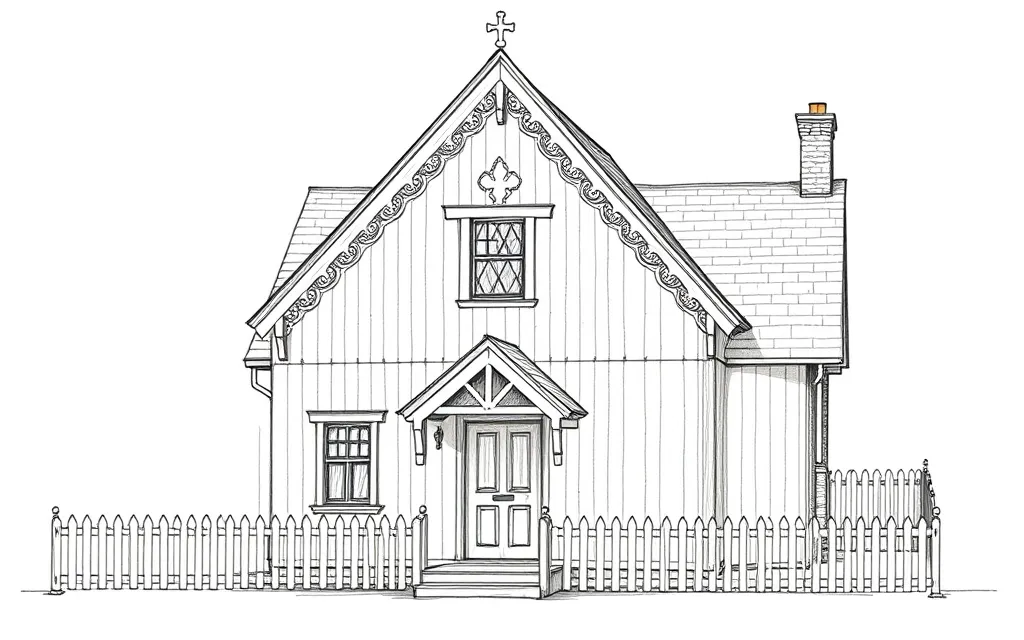
Picturesque cottages and villas with steep gables trimmed with lacy carved bargeboards, pointed-arch windows and board-and-batten walls.
Description
Gothic Revival houses take their steep gables and pointed arches from the medieval churches and manor houses of England. The roof is the dominant feature, with tall, steeply pitched gables, often a central cross gable over the front door, and decorated bargeboards along the eaves.
In timber, the style is often called Carpenter Gothic: board-and-batten walls, jigsaw-cut bargeboards like lace, and pointed windows in the gables. Stone and brick examples have drip moldings over the windows, clustered chimneys and sometimes battlements.
Key characteristics
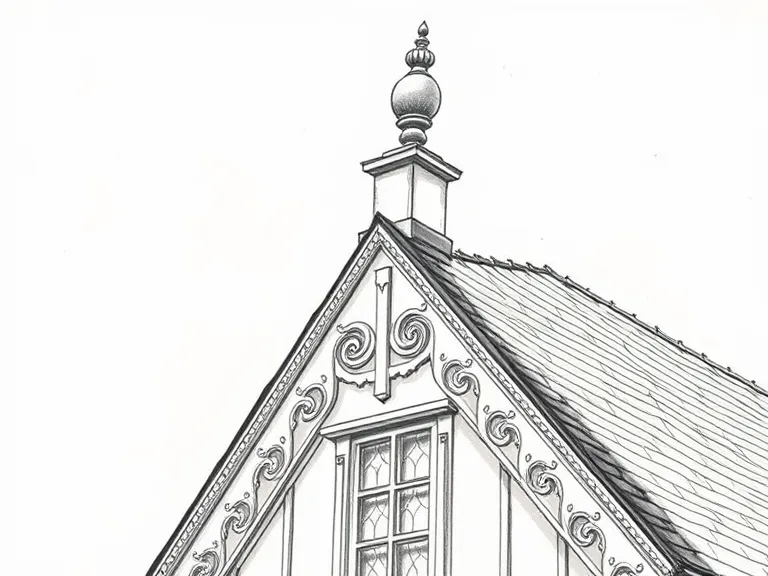
Decorated bargeboards
Lacy, scroll-sawn bargeboards trimming the edges of steep gables, often with a finial at the peak.
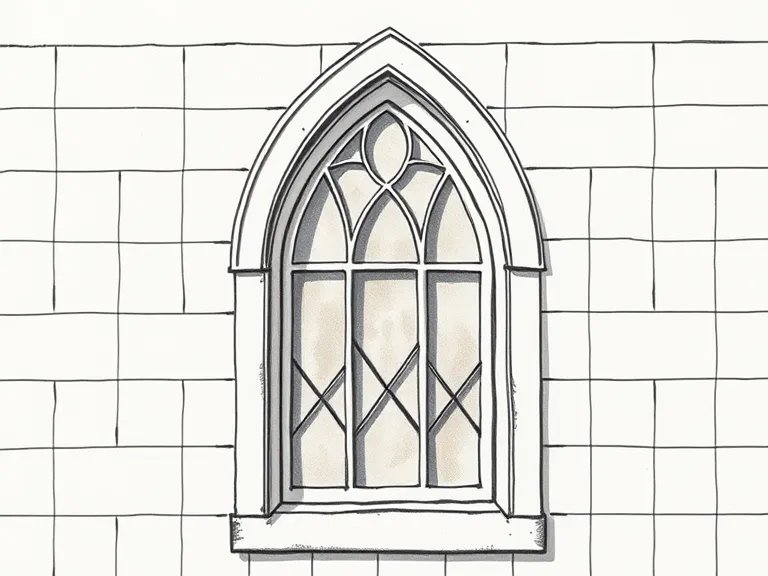
Pointed-arch windows
Lancet windows with a pointed top, often in the gables or in pairs.
Steep gables
Steeply pitched roofs with a central cross gable over the front.
Board-and-batten walls
Vertical boards with narrow battens over the joints, emphasizing height.
Drip moldings
Projecting hood moldings over windows on masonry houses.
One-story porch
A porch with flattened Gothic arches between its posts.
Where you'll find it
Gothic Revival houses are rarer than most styles and are scattered through older towns in the Northeast and Midwest rather than clustered in suburbs.
- Oak Bluffs, Martha's Vineyard MA
- Cape May NJ
- Hudson Valley NY
- Galena IL
- Eldon IA
- Kennebunk ME
History and context
Alexander Jackson Davis's book Rural Residences (1837) and Andrew Jackson Downing's popular pattern books of the 1840s and 1850s promoted the Gothic cottage as a home in harmony with the countryside. The invention of the scroll saw made elaborate wooden trim cheap enough for ordinary houses.
The style suited rural and small-town settings and the new romantic suburbs along the Hudson. Its most famous image is the small house with a Gothic window behind the farmers in Grant Wood's painting American Gothic (1930), which still stands in Eldon, Iowa.
Gothic Revival homes on history.house
No homes have been identified in this style yet. Identify your home's style from a photo, or search for an address.
Style names and periods follow Virginia Savage McAlester, A Field Guide to American Houses (1984; revised 2013). Sketches are illustrations generated for this guide, not photographs of real houses.