Greek Revival
c. 1825–c. 1860 · Romantic period
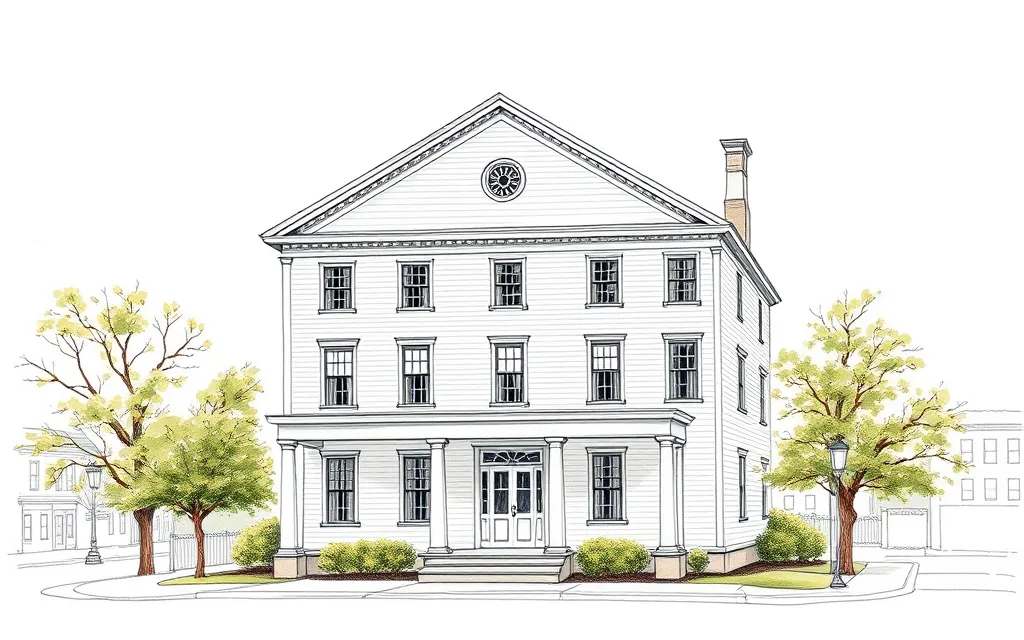
Houses modeled on Greek temples, with a wide band of trim under the roof, a front-facing gable treated as a pediment, and columns or pilasters framing the porch and door.
Description
Greek Revival houses borrow the forms of ancient Greek temples. Many turn their gable end to the street and treat it as a triangular pediment, with a broad band of trim (the entablature) running beneath the roof. Grander houses have a full-height porch of columns, while modest ones suggest columns with flat pilasters at the corners.
The front door is usually surrounded by a rectangular transom and sidelights, framed by pilasters and a heavy flat lintel, rather than the arched fanlight of the Federal style. Walls are usually painted white to imitate marble.
Key characteristics
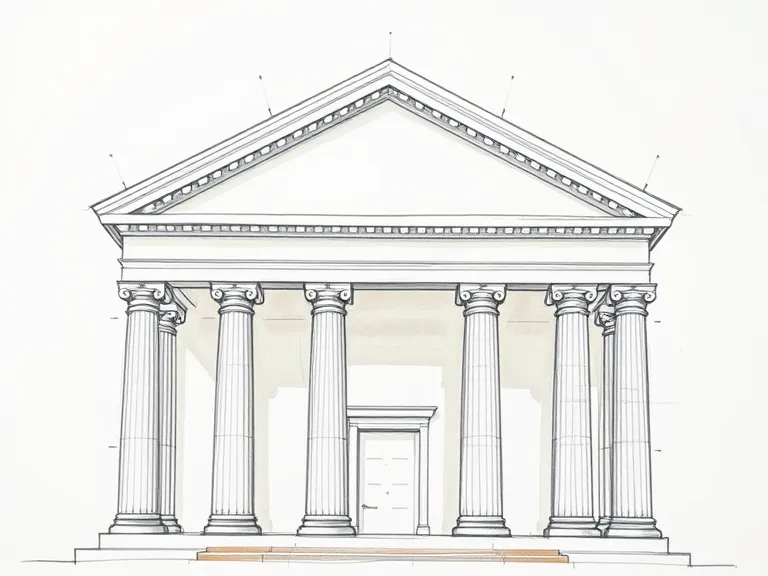
Temple front
A front-facing gable treated as a pediment, sometimes with a full-height porch of columns beneath.
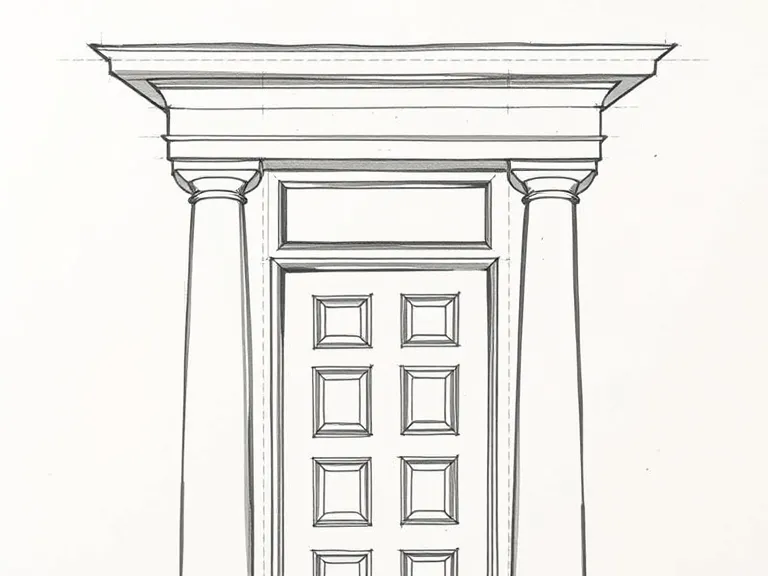
Rectangular door surround
A front door with a rectangular transom and sidelights, framed by pilasters and a flat entablature.
Wide frieze band
A broad band of plain trim under the eaves, sometimes with small attic windows set into it.
Corner pilasters
Wide flat boards at the corners of the house, standing in for columns.
Greek columns
Doric or Ionic columns, usually plain shafts with simple capitals.
Low-pitched roof
A gable or hipped roof of low pitch, like a temple.
Where you'll find it
- Garden District, New Orleans LA
- Natchez MS
- Madison IN
- Marshall MI
- Nantucket MA
- Cazenovia NY
- Athens GA
History and context
Archaeological discoveries in Greece and sympathy for the Greek war of independence of the 1820s made ancient Greece fashionable, and Americans saw their own democracy as heir to Athens. Greek Revival became so popular that it was called the National Style.
Builder's guides by Asher Benjamin and Minard Lafever let local carpenters build temple-fronted houses across New England, upstate New York and the new states of the Midwest, and on the cotton plantations of the South. Town names such as Ithaca, Syracuse and Athens date from the same enthusiasm.
Greek Revival homes on history.house
No homes have been identified in this style yet. Identify your home's style from a photo, or search for an address.
Style names and periods follow Virginia Savage McAlester, A Field Guide to American Houses (1984; revised 2013). Sketches are illustrations generated for this guide, not photographs of real houses.