Federal
c. 1780–c. 1830 · Colonial period
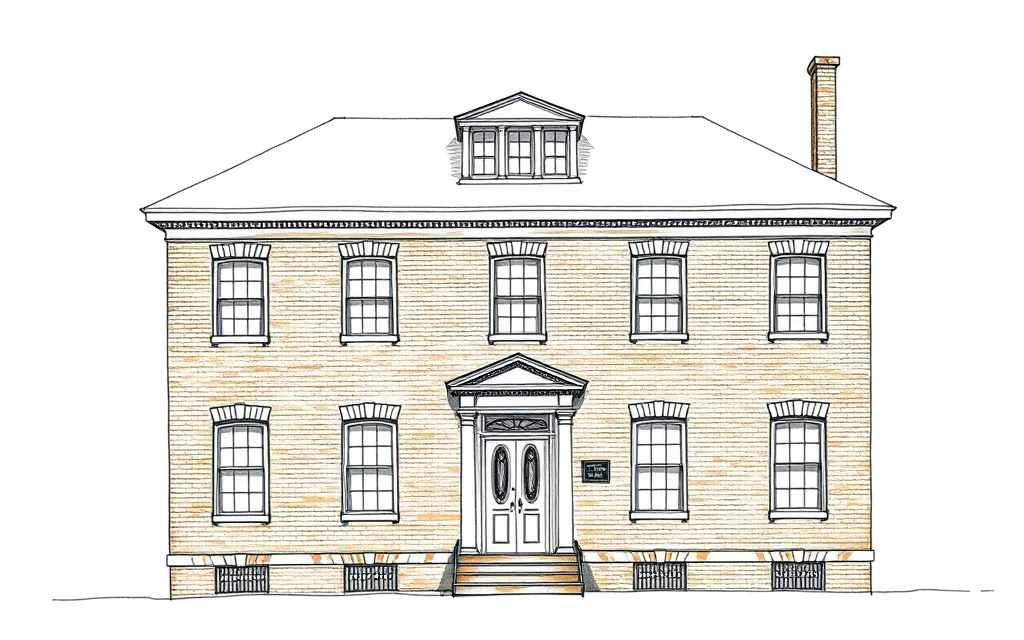
Refined, symmetrical houses with a semicircular or elliptical fanlight over the front door, slender sidelights, thin moldings and delicate classical decoration.
Description
The Federal style (also called Adam, after the Scottish architect brothers who inspired it) is a lighter, more delicate version of Georgian. The house is still a symmetrical box, but it is taller and flatter, with a low-pitched roof often hidden behind a balustrade and decoration that is finer and more restrained.
The front door is the easiest clue: it has a semicircular or elliptical fanlight above, often with sidelights on each side, all set in a slender, elegant frame. Windows have thinner glazing bars and larger panes than Georgian ones. Swags, garlands and urns sometimes decorate cornices and mantels.
Key characteristics
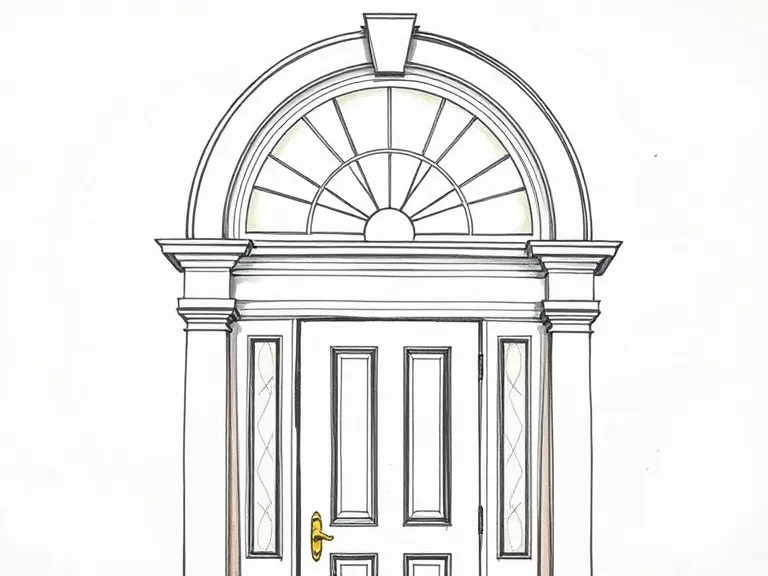
Fanlight and sidelights
A semicircular or elliptical fanlight over the front door, often with narrow sidelights beside it.
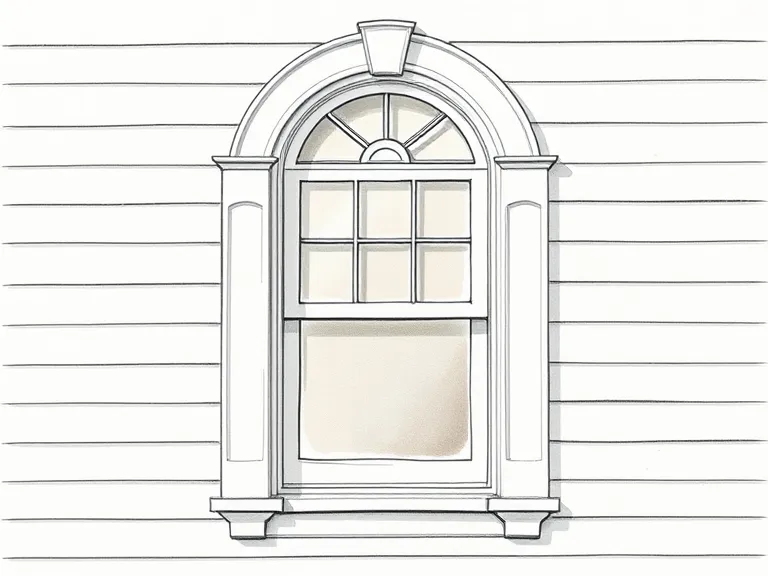
Palladian window
A three-part window with an arched center, often above the front entry.
Low roof and balustrade
A low-pitched hipped or side-gabled roof, sometimes hidden behind a balustrade at the eaves.
Six-over-six windows
Double-hung sash windows with thin glazing bars, usually six panes over six.
Delicate ornament
Swags, garlands, urns and fine moldings, more delicate than Georgian work.
Curved spaces
In grander houses, oval rooms, curved bays and elliptical stairs.
Where you'll find it
- Beacon Hill, Boston MA
- Salem MA
- Nantucket MA
- Portsmouth NH
- Georgetown DC
- Old Town Alexandria VA
- Charleston SC
History and context
After the Revolution, American architects and builders took up the style that Robert and James Adam had made fashionable in Britain, based on their study of Roman houses rather than temples. Charles Bulfinch in Boston and Samuel McIntire in Salem designed some of the finest examples, and Asher Benjamin's builder's guides spread the style to country carpenters.
Federal houses line the streets of the young republic's port towns, built by merchants grown rich on trade. By the 1830s the fashion had moved on to Greek Revival, but Federal details returned as part of the Colonial Revival from the 1880s onward.
Federal homes on history.house
No homes have been identified in this style yet. Identify your home's style from a photo, or search for an address.
Style names and periods follow Virginia Savage McAlester, A Field Guide to American Houses (1984; revised 2013). Sketches are illustrations generated for this guide, not photographs of real houses.