Garden Apartments
c. 1920–c. 1970 · Postwar apartments period
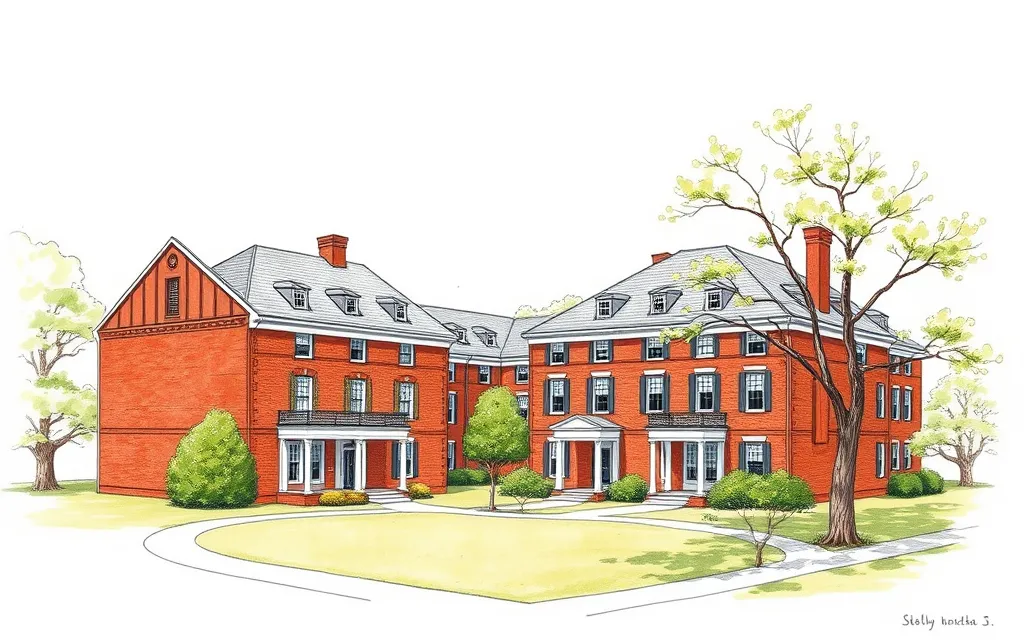
Groups of two- and three-story walk-up apartment buildings set in lawns and trees, often across a whole block, away from the street.
Description
Garden apartments are low walk-up buildings, usually two or three stories, arranged around lawns, trees and paths rather than lined up along a street. A complex may cover a whole block or a large suburban site, with parking grouped at the edges.
Early examples have Colonial Revival or Tudor detail in red brick, with pitched roofs, entry porticos and multi-pane windows. Postwar complexes are plainer, with low hipped roofs, steel or aluminum windows and simple brick or siding walls.
Key characteristics
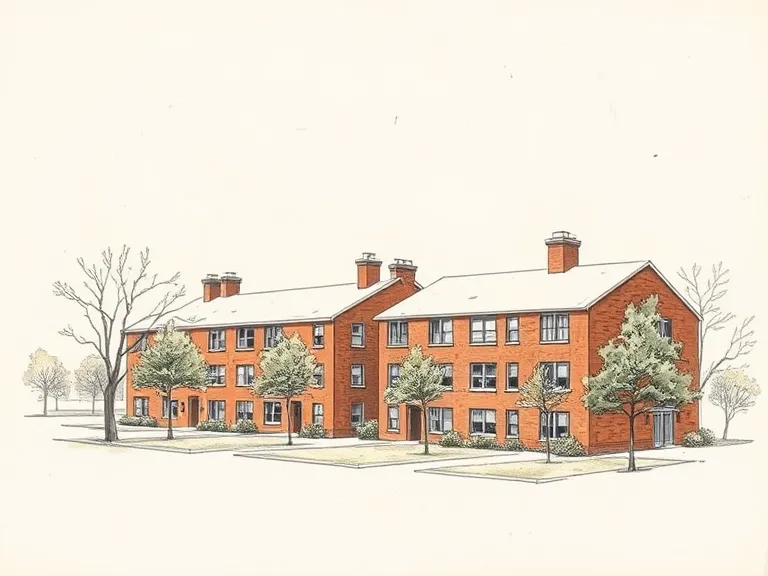
Buildings in lawns
Low buildings set among shared lawns and trees, not along the street.
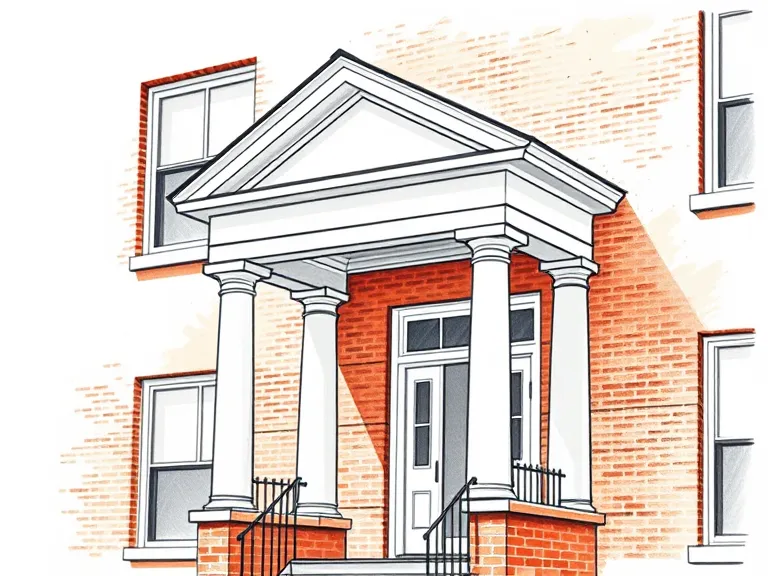
Entry porticos
Small porticos or stoops at each shared entrance and stair.
Walk-up
Two or three stories with shared stairs and no elevator.
Red brick
Red brick walls, often with Colonial Revival detail.
Grouped parking
Parking courts or garages grouped at the edges of the site.
Where you'll find it
- Jackson Heights, Queens NY
- Sunnyside, Queens NY
- Arlington VA
- Alexandria VA
- Baldwin Hills, Los Angeles CA
- Silver Spring MD
History and context
Garden apartments grew from the garden city movement and the housing reform of the 1920s, in projects such as Jackson Heights and Sunnyside Gardens in Queens. Setting buildings in open grounds gave renters light, air and greenery at a moderate cost.
From the mid-1930s the Federal Housing Administration insured mortgages for large rental projects, and its design standards made the garden apartment the standard form of suburban rental housing. Thousands of complexes were built for returning veterans after World War II.
Garden Apartments homes on history.house
No homes have been identified in this style yet. Identify your home's style from a photo, or search for an address.
Sources: Virginia Savage McAlester, A Field Guide to American Houses (1984; revised 2013); National Park Service, National Register of Historic Places nominations and multiple property documentation; Elizabeth Collins Cromley, Alone Together: A History of New York's Early Apartments (1990). Sketches are illustrations generated for this guide, not photographs of real buildings.