Dutch Colonial
c. 1625–c. 1840; revived c. 1900–c. 1940 · Colonial period
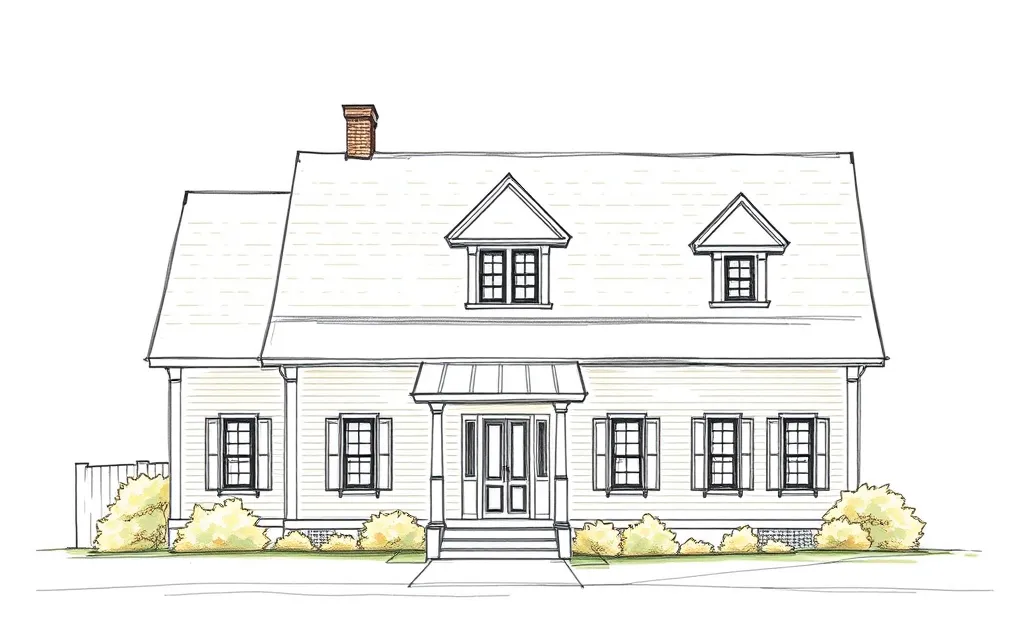
Houses with a broad gambrel roof whose lower slopes flare out over the eaves, first built by Dutch settlers in New York and New Jersey and widely revived in the 1900s.
Description
The original Dutch Colonial houses of the Hudson Valley and northern New Jersey are low, one-and-a-half-story houses of stone, brick or timber. The best-known form has a gambrel roof, with two slopes on each side, and wide eaves that flare outward into a gentle curve, often sheltering a porch along the front.
From about 1900 the style was revived as Dutch Colonial Revival, a subtype of Colonial Revival. These later houses keep the gambrel roof but often turn it so the long side faces the street, with a continuous shed dormer across the front to make a full second story.
Key characteristics
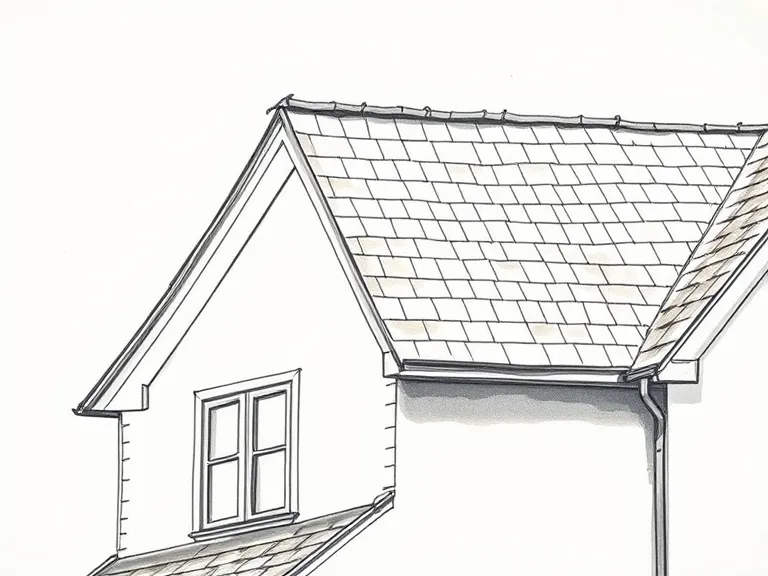
Gambrel roof
A roof with two slopes on each side, the lower one steep and the upper one shallow, like a barn.
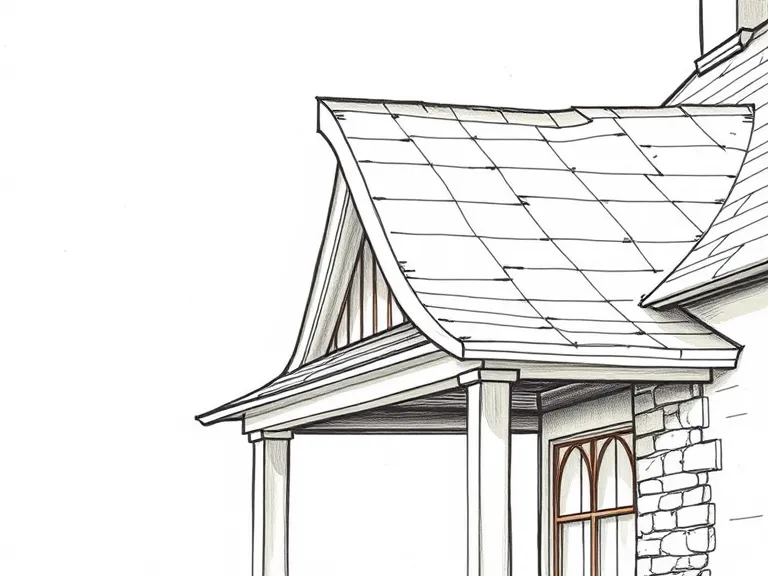
Flared eaves
The lower edge of the roof curving gently outward, often over a full-width porch.
Dutch door
A front door split horizontally, so the top half can open on its own.
Stone or brick walls
Thick fieldstone or brick walls on early houses, sometimes with timber gable ends.
Wide shed dormer
On revival houses, a long shed dormer across the front of the gambrel roof.
End chimneys
Chimneys at one or both gable ends rather than in the center.
Where you'll find it
Original Dutch Colonial houses survive in the Hudson Valley, Brooklyn and Bergen County. Dutch Colonial Revival houses are common in early 1900s suburbs across the country.
- Hurley NY
- New Paltz NY
- Kingston NY
- Flatbush, Brooklyn NY
- Hackensack NJ
- River Edge NJ
History and context
The Dutch West India Company settled New Netherland from the 1620s, and Dutch, Flemish, Walloon and Huguenot families kept building in their own traditions long after the English took over in 1664. Their stone houses at Hurley and New Paltz, and the farmhouses of Brooklyn and Bergen County, are among the oldest in the country.
The gambrel roof with flared eaves became the signature of the style, although it was a later, American development. Around 1900 it was taken up for the Dutch Colonial Revival, and mail-order catalogs such as Sears offered gambrel-roofed houses through the 1920s and 1930s.
Dutch Colonial homes on history.house
No homes have been identified in this style yet. Identify your home's style from a photo, or search for an address.
Style names and periods follow Virginia Savage McAlester, A Field Guide to American Houses (1984; revised 2013). Sketches are illustrations generated for this guide, not photographs of real houses.