Inter-war Art Deco Flats
c. 1925–c. 1945 · Federation and Inter-war flats period
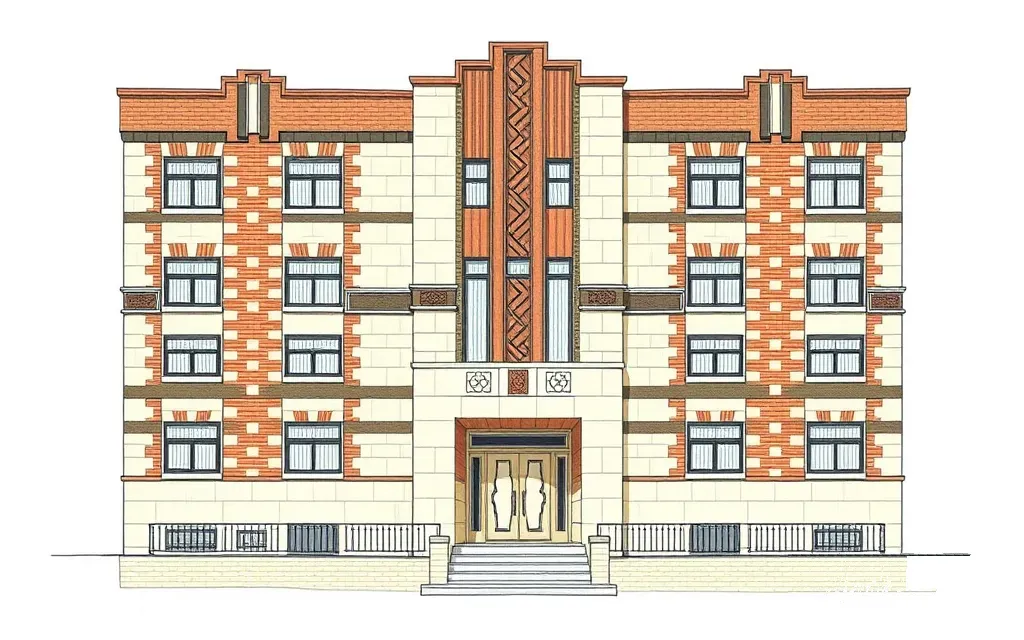
Blocks of flats in patterned face brick with stepped parapets, vertical fins over the stair, chevrons and decorative grilles.
Description
Art Deco flats are usually symmetrical blocks whose mass steps back as it rises, finished with a stepped parapet. The stair or entry is often marked by a tall vertical panel with fins or piers rising above the roofline.
Decorative face brickwork in cream, red and manganese brown, parallel lines, chevrons and zigzags, and ornamental window grilles give the style its character, with the decoration concentrated on the upper part of the building and around the entry.
Key characteristics
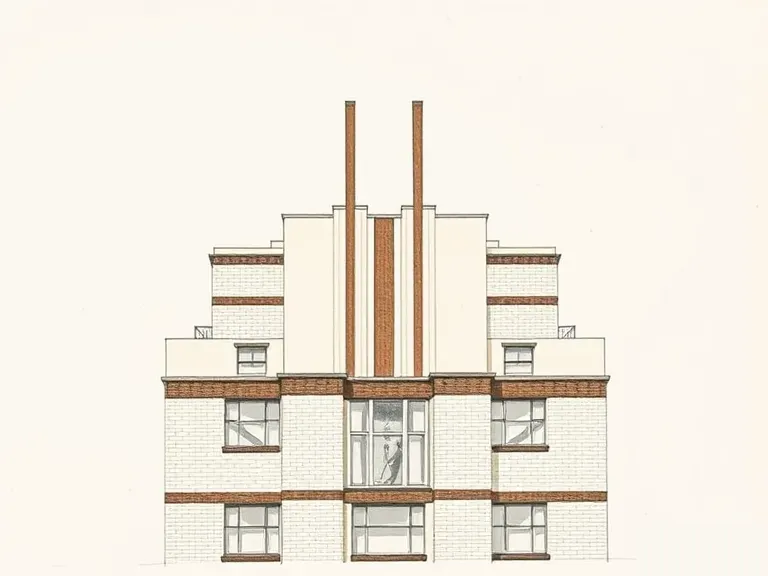
Stepped parapet
A stepped parapet with vertical fins rising over the entry or stair.
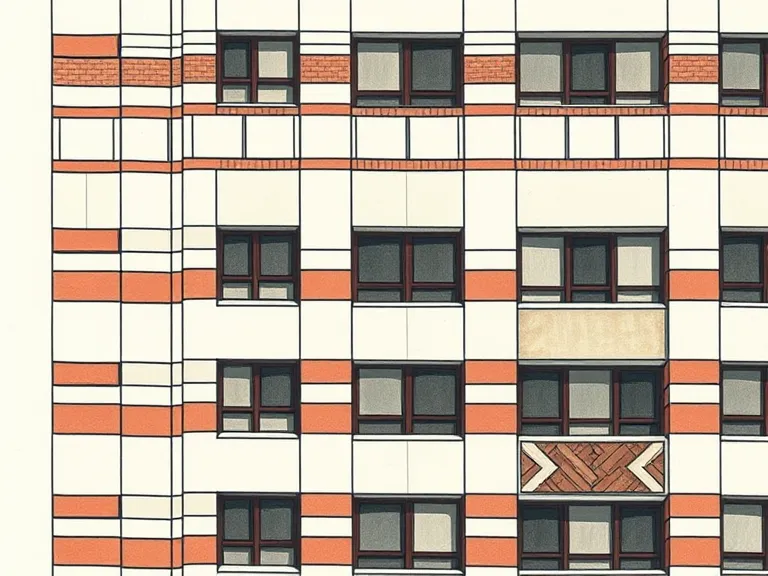
Patterned brickwork
Bands and panels of cream, red and brown face brick.
Chevrons and lines
Parallel-line, chevron and zigzag motifs.
Ornamental grilles
Decorative metal grilles over windows and doors.
Symmetrical front
A symmetrical block, often with a central entry and stair tower.
Where you'll find it
- Bondi NSW
- Kingsford NSW
- Potts Point NSW
- Elizabeth Bay NSW
- St Kilda VIC
- Elwood VIC
- Mount Lawley WA
- New Farm QLD
History and context
Art Deco took its name from the 1925 Paris exhibition and spread through cinemas, shops and offices in the 1930s. Builders adopted its geometric decoration for blocks of flats, where patterned brick made a modern statement at little extra cost.
Apperly, Irving and Reynolds name the style Inter-war Art Deco, and it is one of the most common styles in the Waverley Inter-War Flat Building Study. Building continued into the late 1940s in the same manner.
Inter-war Art Deco Flats homes on history.house
No homes have been identified in this style yet. Identify your home's style from a photo, or search for an address.
Sources: Richard Apperly, Robert Irving and Peter Reynolds, Identifying Australian Architecture (1989); Waverley Council, Inter-War Flat Building Study and Design Guidelines; Charles Pickett, 'The six-pack: the past and present of walk-up flats' (Australia ICOMOS, 2009); Caroline Butler-Bowdon and Charles Pickett, Homes in the Sky: Apartment Living in Australia (2007). Sketches are illustrations generated for this guide, not photographs of real buildings.