Rowhouse
c. 1790–c. 1930 · Rowhouses and duplexes period
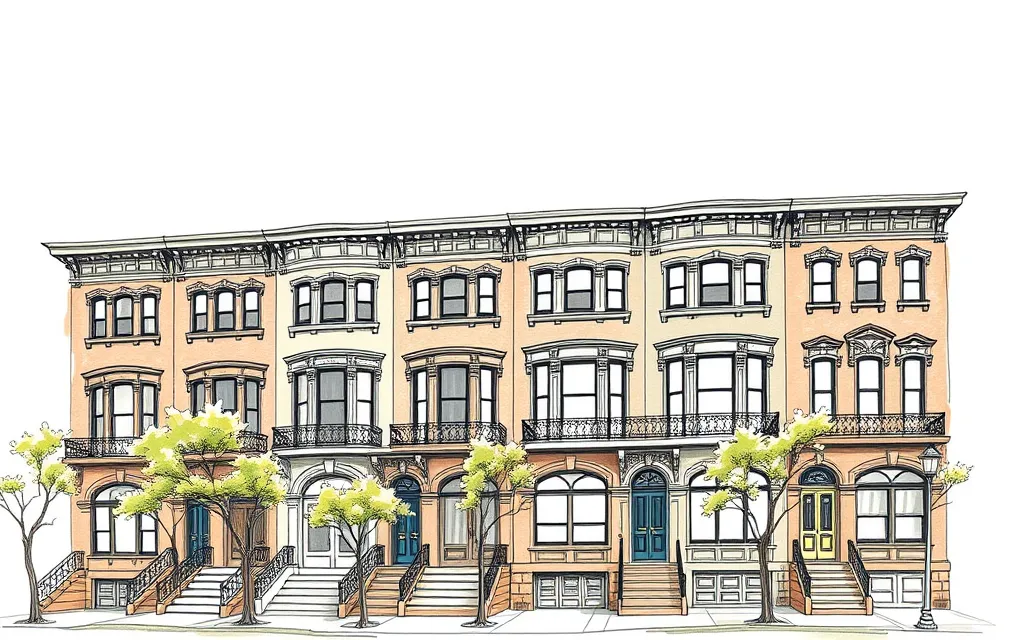
Narrow, attached city houses built in continuous rows with shared side walls, from Federal brick rows and New York brownstones to Baltimore's marble-stepped rowhouses.
Description
A rowhouse is a narrow house of two to four stories built as part of a continuous row, sharing its side walls with its neighbors. The type, not the style, defines it: rowhouses were built in every fashion of their day, from Federal and Greek Revival to Italianate, Second Empire, Queen Anne and Romanesque.
New York's brownstones have a high stoop up to a parlor floor and walls faced in brown sandstone. Baltimore and Philadelphia rowhouses are typically red brick with white marble steps, and Boston's South End has rows of bow-fronted houses. Later rowhouses often have bay windows, front porches or decorative cornices.
Key characteristics
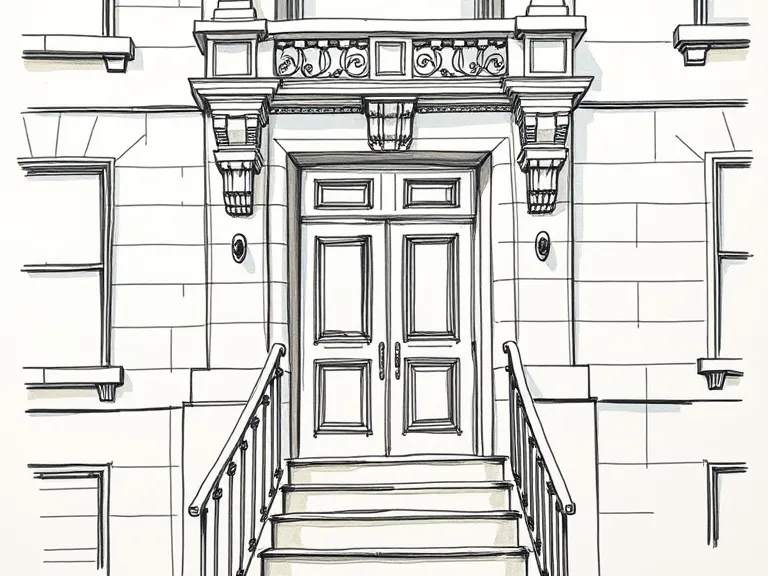
High stoop
A flight of steps up to a raised front door on the parlor floor.
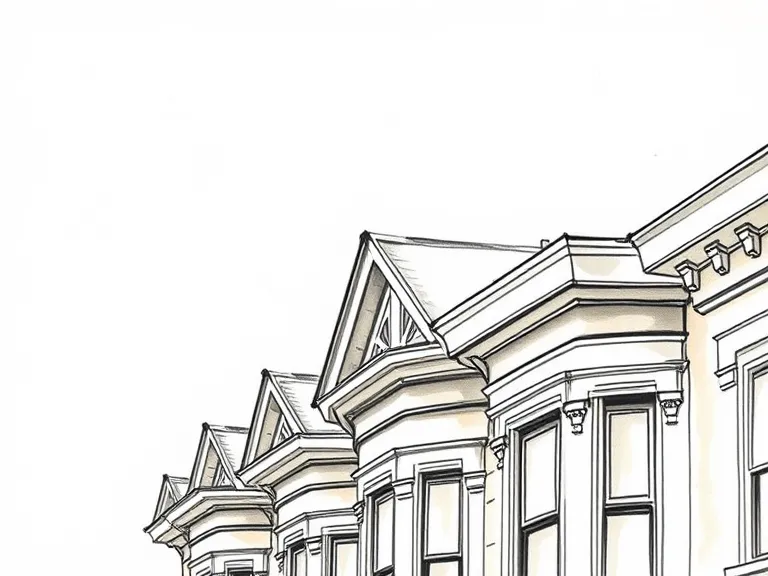
Bracketed cornice
A projecting cornice, often of pressed metal, running along the roofline of the row.
Shared side walls
Party walls shared with the houses on either side.
Narrow front
A front of two or three bays, usually 16 to 25 feet wide.
Brownstone or brick
Walls faced in brownstone, red brick or limestone.
Bay or bow fronts
Rounded or angled bays rising the full height of the front.
Where you'll find it
- Park Slope, Brooklyn NY
- Harlem, Manhattan NY
- Federal Hill, Baltimore MD
- Fishtown, Philadelphia PA
- South End, Boston MA
- Capitol Hill DC
- Soulard, St. Louis MO
History and context
Rowhouses came to America from the cities of Britain and the Netherlands, and by 1800 they lined the streets of Philadelphia, Baltimore, New York and Boston. Builders bought a block of land and put up a whole row at once, in identical or similar designs.
The type reached its peak between 1850 and 1910, as cities grew rapidly and streetcars opened new neighborhoods. Philadelphia and Baltimore built rows of modest houses for working families, while New York's brownstones housed the middle class. After a long decline, many rowhouse neighborhoods have been restored since the 1970s.
Rowhouse homes on history.house
No homes have been identified in this style yet. Identify your home's style from a photo, or search for an address.
Sources: Virginia Savage McAlester, A Field Guide to American Houses (1984; revised 2013); National Park Service, National Register of Historic Places nominations and multiple property documentation; Elizabeth Collins Cromley, Alone Together: A History of New York's Early Apartments (1990). Sketches are illustrations generated for this guide, not photographs of real buildings.