Neo-eclectic
c. 1965–present · New Traditional period
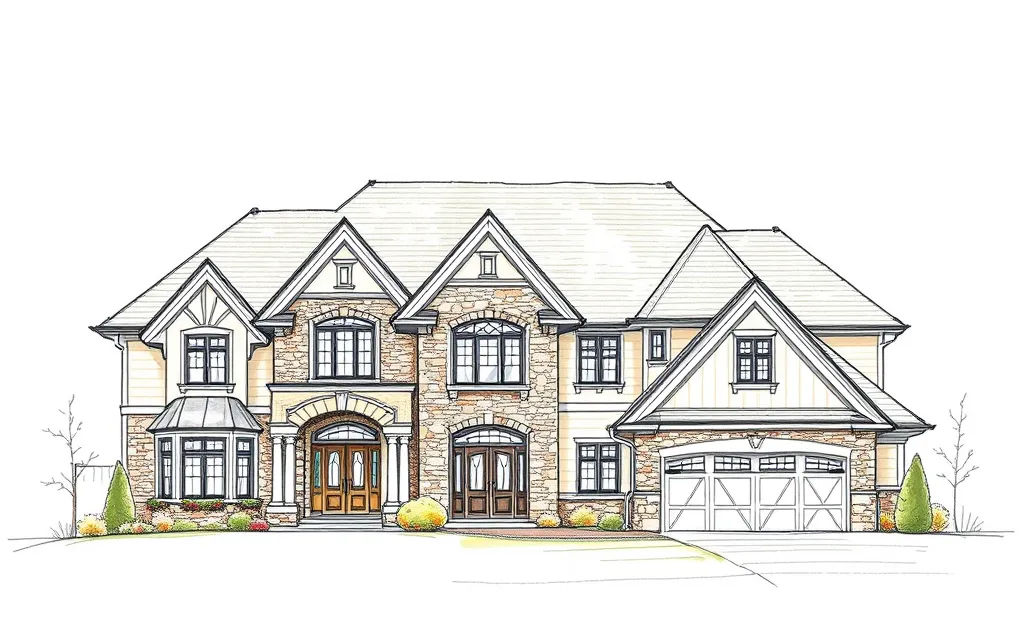
Large suburban houses that mix historical details freely: steep, complex rooflines, tall entry porticos, Palladian and arched windows, and brick or stone fronts with siding on the sides.
Description
Neo-eclectic (McAlester's term; also called Millennium Mansion or, less kindly, McMansion) describes the many houses since the late 1960s that borrow from historic styles without following any one. A single house may combine a Colonial entry, Tudor gables, French windows and a Mediterranean tile roof.
Typical features are complex roofs with many steep gables and hips, a two-story entry with a tall portico or arched window, prominent garages, and a front of brick, stone or stucco, with cheaper siding on the sides and back. Variants imitate Mansard, French, Tudor, Mediterranean and Colonial styles.
Key characteristics
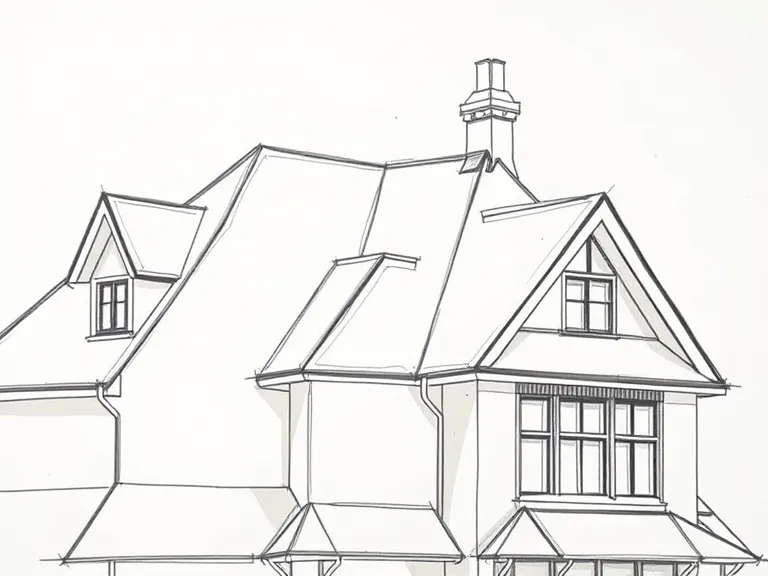
Complex roofline
Many intersecting steep gables and hips of different heights.
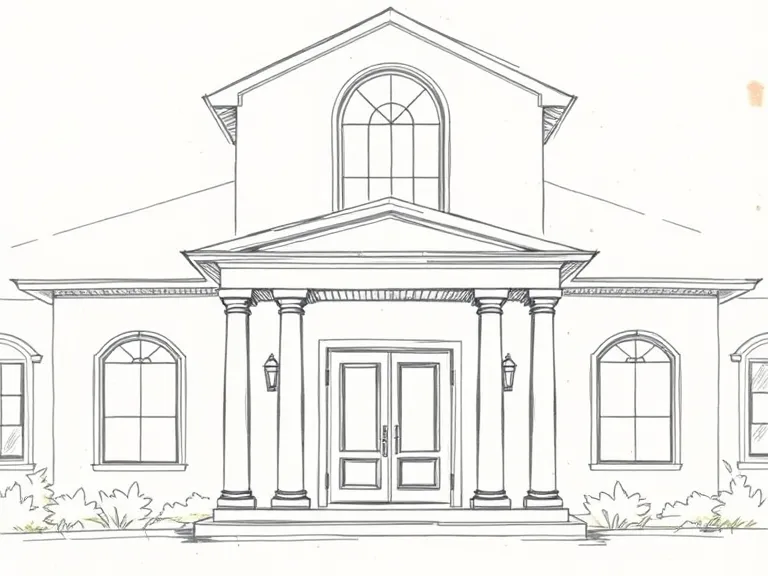
Two-story entry
A tall entry with a portico, columns or an arched transom window.
Mixed historical details
Elements of several styles combined on one house.
Dressed front
Brick, stone or stucco on the front, with siding on the sides and back.
Prominent garage
A two- or three-car garage, often facing the street.
Arched and Palladian windows
Arched transoms and Palladian windows used as focal points.
Where you'll find it
- Frisco TX
- The Woodlands TX
- Naperville IL
- Alpharetta GA
- Cary NC
- Loudoun County VA
- Plano TX
History and context
By the late 1960s, buyers were tiring of the Ranch and Contemporary houses, and builders responded with houses that looked traditional again. Mansard roofs were fashionable in the 1970s, and the 1980s brought a flood of houses mixing Colonial, Tudor, French and Mediterranean details.
Houses grew steadily larger through the 1990s and 2000s, and the Neo-eclectic house became the standard of new outer suburbs, especially in the South and West. The housing crash of 2008 slowed building, and newer subdivisions have moved toward simpler forms such as the Modern Farmhouse.
Neo-eclectic homes on history.house
No homes have been identified in this style yet. Identify your home's style from a photo, or search for an address.
Style names and periods follow Virginia Savage McAlester, A Field Guide to American Houses (1984; revised 2013). Sketches are illustrations generated for this guide, not photographs of real houses.