Contemporary
c. 1950–present · Modern period
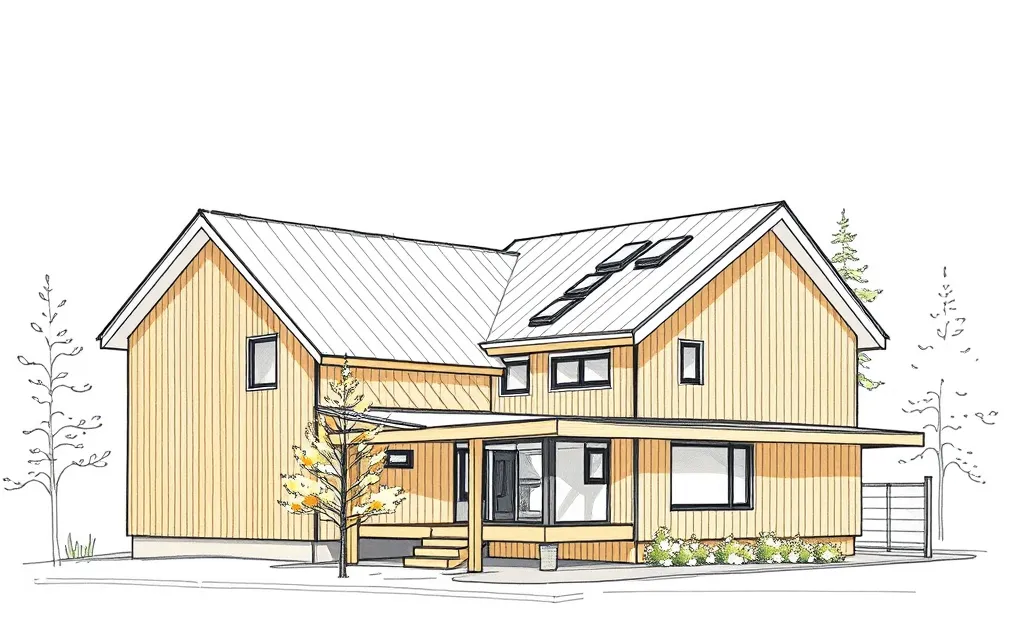
Modern houses with unusual roof shapes, such as wide gables or angled sheds, natural wood siding, clerestory windows, and few windows facing the street.
Description
In McAlester's guide, Contemporary describes the modern houses builders put up from the 1950s through the 1970s. Some have low, wide front gables with exposed beams; others have angled shed roofs at different heights, with clerestory windows between.
Walls are clad in natural wood, often vertical or diagonal siding, with brick or stone. They tend to show the street a fairly blank front and open to the back with large windows. Today the term is also used for the varied modern houses of the 2000s, with mixed cladding, flat or shed roofs and large windows.
Key characteristics
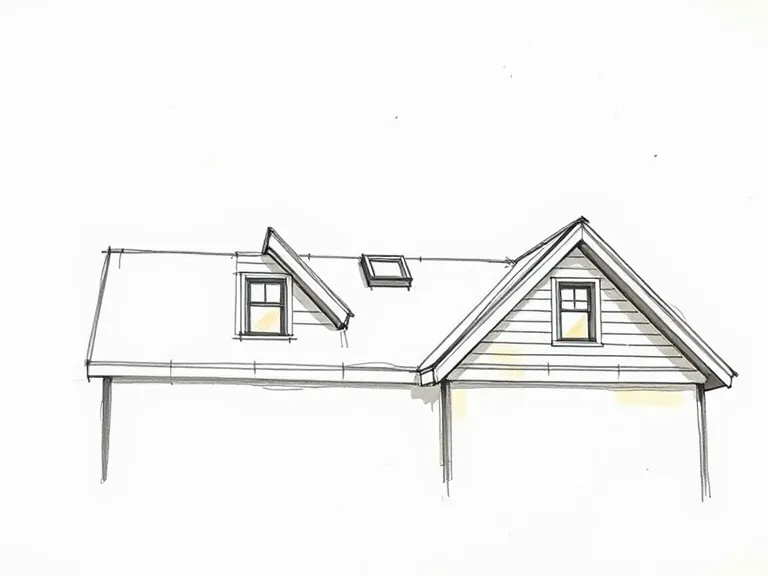
Angled shed roofs
Shed roofs of different heights and slopes, with clerestory windows between them.
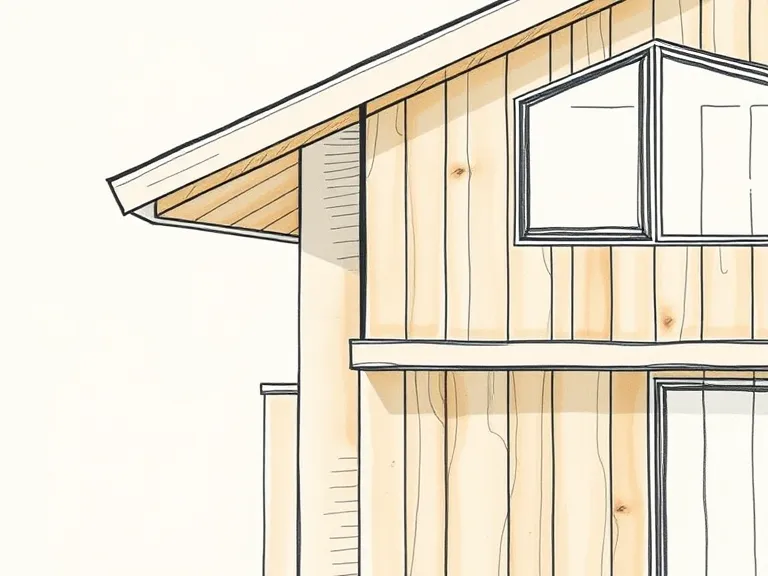
Wood siding
Natural vertical, diagonal or tongue-and-groove wood siding.
Blank street front
Few windows facing the street, with large glass at the back.
Exposed beams
Roof beams extending past the walls under wide gables.
Mixed materials
Wood with stone, brick or, on newer houses, metal and fiber-cement panels.
Where you'll find it
- Sea Ranch CA
- Reston VA
- Columbia MD
- Bellevue WA
- Austin TX
- Boulder CO
History and context
Contemporary houses developed alongside the Ranch in the late 1940s as builders adapted the work of modern architects for a wider market. Early versions had flat roofs or low gables, and in the 1960s and 1970s steep, angled shed roofs became popular, inspired by the Sea Ranch on the Northern California coast (begun 1965).
Contemporary styles fell from favor in the 1980s as traditional styles returned, but modern design came back strongly in the 2000s. New houses with flat or shed roofs, big windows and mixed cladding are often simply called contemporary or modern.
Contemporary homes on history.house
No homes have been identified in this style yet. Identify your home's style from a photo, or search for an address.
Style names and periods follow Virginia Savage McAlester, A Field Guide to American Houses (1984; revised 2013). Sketches are illustrations generated for this guide, not photographs of real houses.