Colonial Revival
c. 1880–c. 1955 · Eclectic period
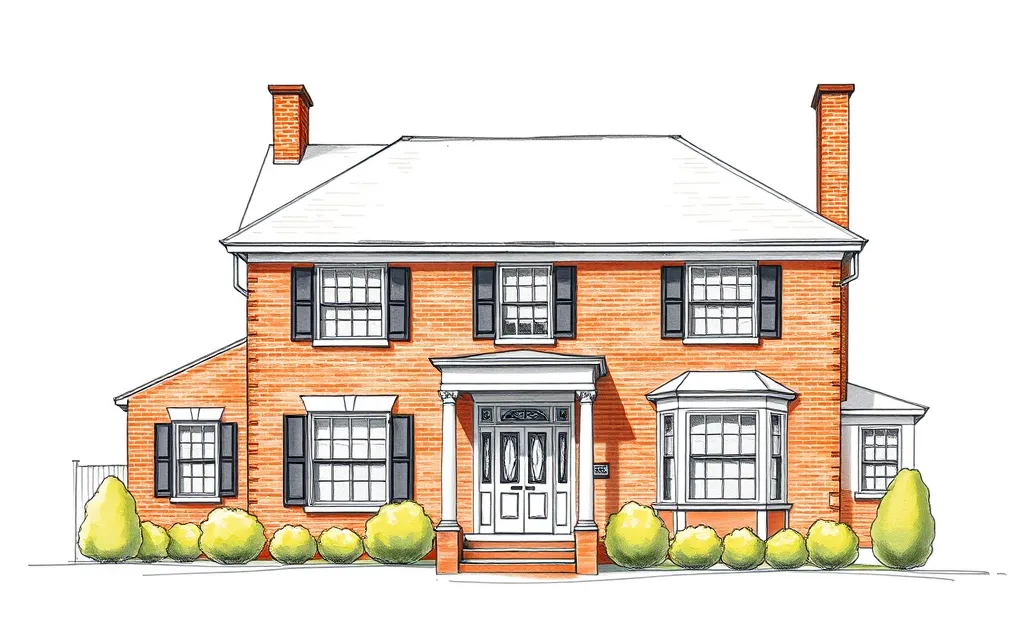
Symmetrical two-story houses that revive Georgian and Federal details: a centered front door with a decorative pediment or fanlight, multi-pane windows in pairs, and shutters.
Description
Colonial Revival houses borrow from the Georgian and Federal houses of the colonial era, but are rarely exact copies. The most common form is a symmetrical two-story box with a side-gabled or hipped roof, a centered front door, and windows arranged in balanced rows.
The entry gets the most attention: a door with a pediment supported on pilasters or slender columns, a small entry porch, or a fanlight with sidelights. Double-hung windows often have multiple panes in the upper sash only and are frequently paired, and shutters are almost universal.
Key characteristics
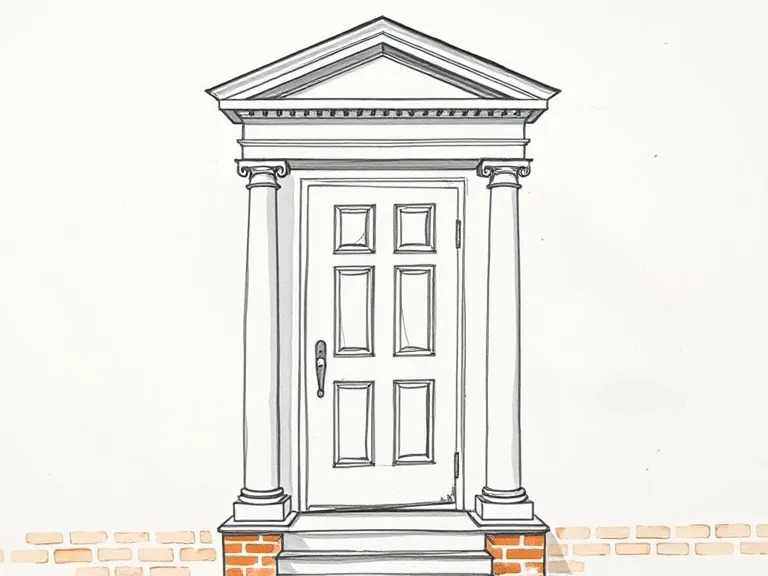
Pedimented entry
A centered front door with a pediment or small porch supported on columns or pilasters.
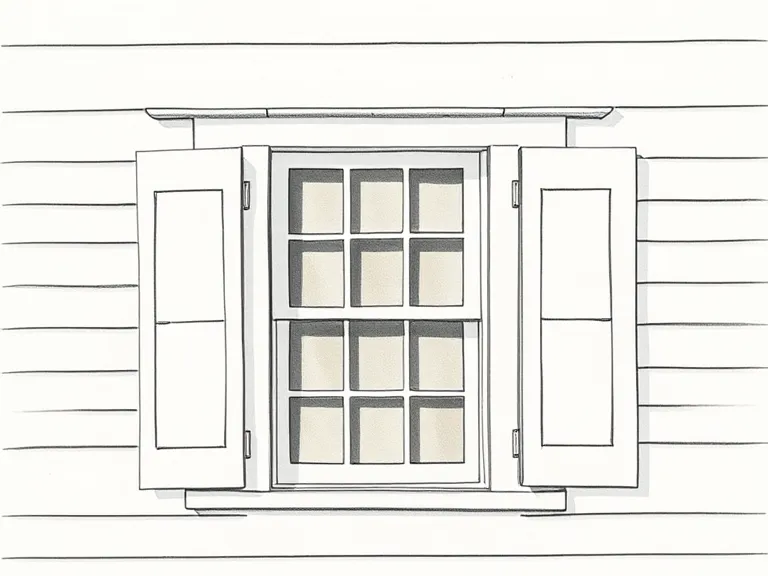
Shuttered windows
Double-hung windows with shutters, often paired and with multi-pane upper sashes.
Symmetrical front
A balanced front with the door in the center and windows evenly spaced.
Side-gabled or hipped roof
A simple roof, sometimes with dormers.
Side porch or sunroom
A one-story wing or screened porch on one side.
Brick or clapboard walls
Red brick, painted clapboard or shingles.
Where you'll find it
- Shaker Heights OH
- Chevy Chase MD
- Scarsdale NY
- Wellesley MA
- Highland Park TX
- Upper Arlington OH
- Hancock Park, Los Angeles CA
- West Hartford CT
On history.house so far: Babylon (1), Toledo (1).
History and context
The 1876 Centennial in Philadelphia stirred a new interest in the nation's colonial past, and architects such as McKim, Mead & White began measuring and drawing old houses in New England. By the 1890s Colonial Revival was challenging Queen Anne, and early versions often mixed the two.
The restoration of Colonial Williamsburg from 1926 encouraged more accurate copies, and Colonial Revival became the dominant style of the 1920s and 1930s suburbs. It has never really gone out of fashion, and its details reappear on many Neo-eclectic and new traditional houses.
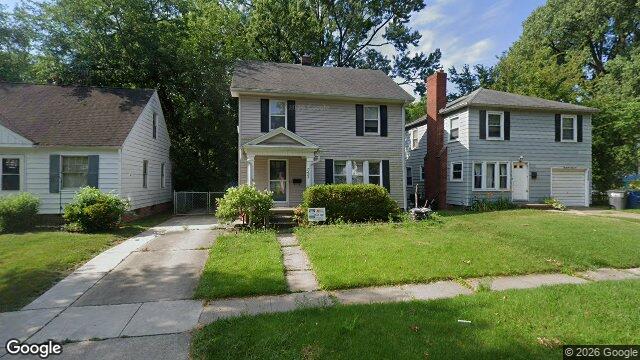
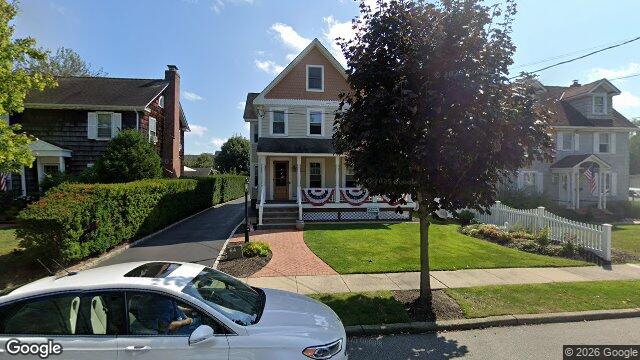
Colonial Revival homes on history.house
2 homes identified as Colonial Revival from their style analysis.
Style names and periods follow Virginia Savage McAlester, A Field Guide to American Houses (1984; revised 2013). Sketches are illustrations generated for this guide, not photographs of real houses.