Late Twentieth-Century Post-Modern Apartments
c. 1980–c. 2000 · Late twentieth-century flats period
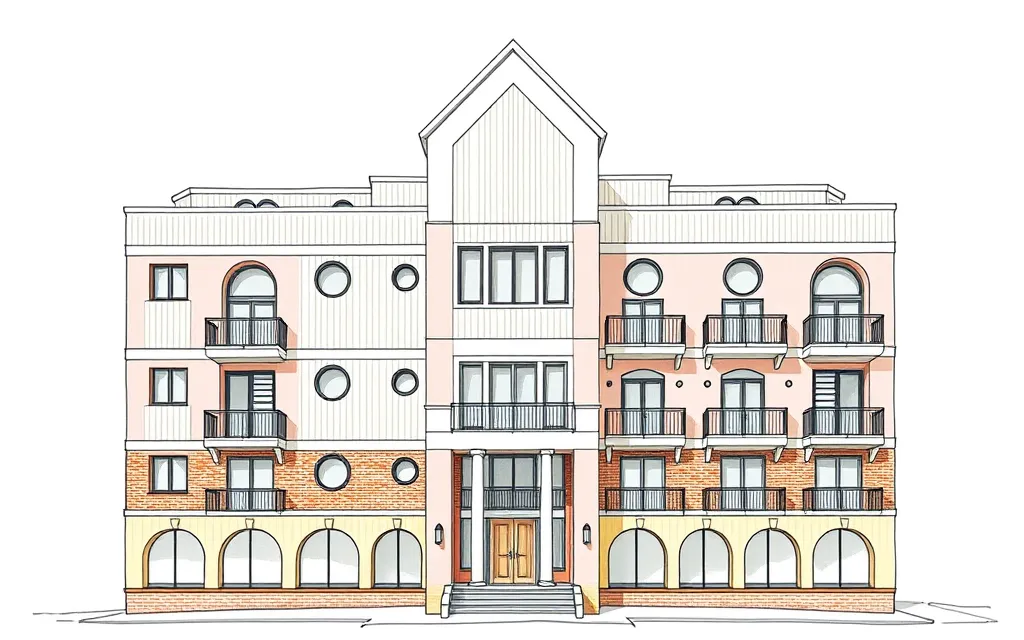
1980s and 1990s apartment blocks and townhouse groups with playful classical motifs: pediments, round windows, columns, arches and pastel colours.
Description
Post-Modern apartments react against plain modernism by bringing back historical references, often with wit. Blocks are dressed with pediments, broken gables, round and lunette windows, stubby columns, keystones and arches, picked out in pastel or contrasting colours.
Walls are usually rendered or of face brick with rendered bands, roofs are often pitched or hidden behind gabled parapets, and balconies may have balustrades or panels with cut-out shapes.
Key characteristics
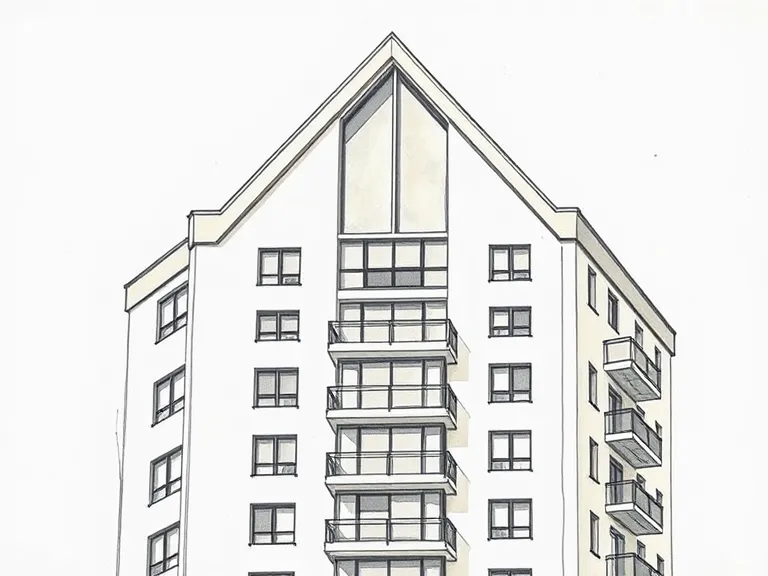
Pediments and gables
Triangular pediments or broken gables over bays and entries.
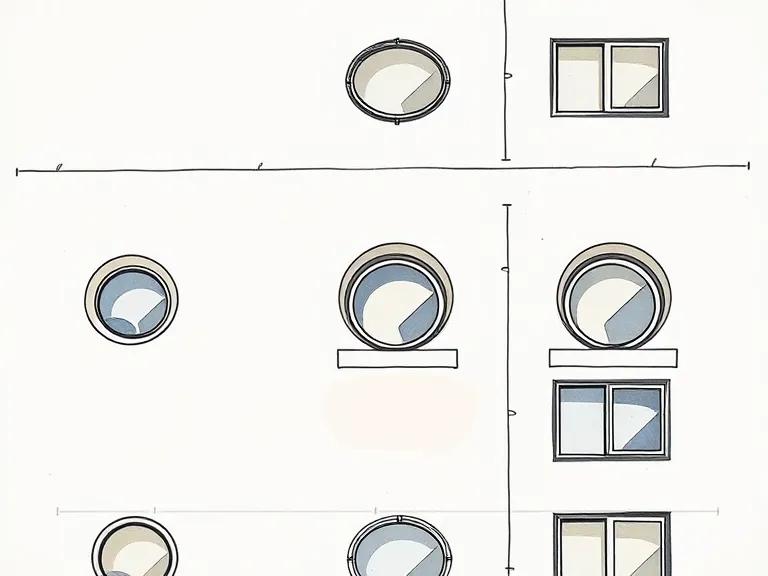
Round windows
Round, lunette or arched windows used as features.
Pastel colours
Render in pastel or contrasting colours.
Classical fragments
Columns, keystones and arches used freely and playfully.
Banded walls
Face brick with rendered bands, or render with incised lines.
Where you'll find it
- Darlinghurst NSW
- Surry Hills NSW
- Manly NSW
- Port Melbourne VIC
- South Melbourne VIC
- Kangaroo Point QLD
History and context
Post-Modernism arrived in Australia in the late 1970s and was taken up by architects and developers through the 1980s and 1990s. Apperly, Irving and Reynolds name the style Late Twentieth-Century Post-Modern.
Apartment and townhouse developments of the period used its colours and classical fragments to give large buildings a friendlier, more domestic look.
Late Twentieth-Century Post-Modern Apartments homes on history.house
No homes have been identified in this style yet. Identify your home's style from a photo, or search for an address.
Sources: Richard Apperly, Robert Irving and Peter Reynolds, Identifying Australian Architecture (1989); Waverley Council, Inter-War Flat Building Study and Design Guidelines; Charles Pickett, 'The six-pack: the past and present of walk-up flats' (Australia ICOMOS, 2009); Caroline Butler-Bowdon and Charles Pickett, Homes in the Sky: Apartment Living in Australia (2007). Sketches are illustrations generated for this guide, not photographs of real buildings.