Late Twentieth-Century Late Modern
c. 1970– · Late Twentieth-Century period
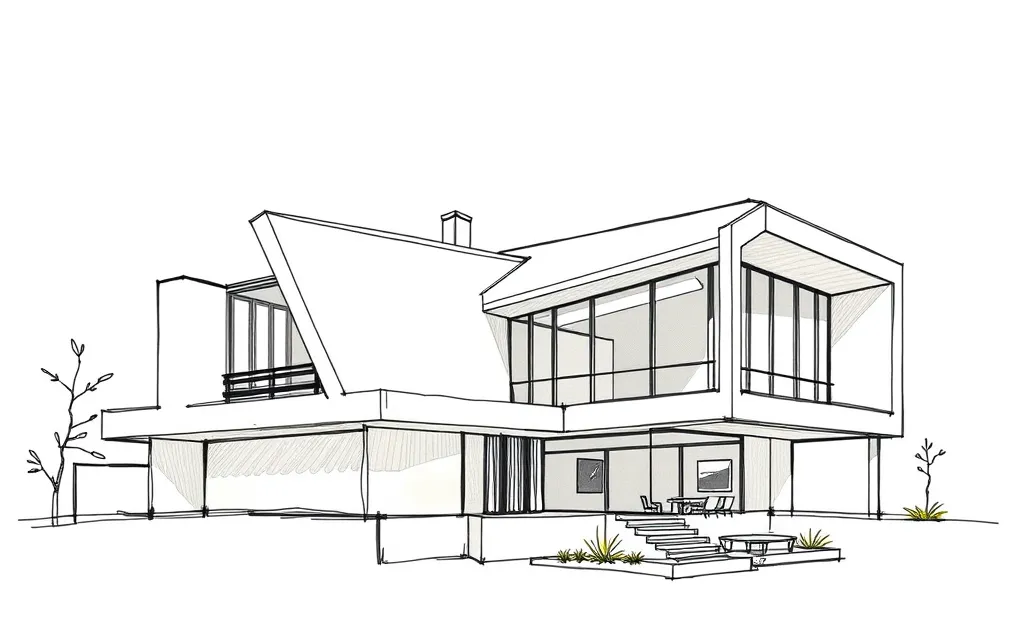
Sculptural modern houses with sharp angles, diagonals, metal cladding and large areas of glass.
Description
Late Twentieth-Century Late Modern houses push modernism towards sculpture. Forms are sharp-edged and angular, with diagonals, slopes and dramatic cut-outs, and materials such as profiled metal, smooth render and tinted glass are used to stress the shapes.
Key characteristics
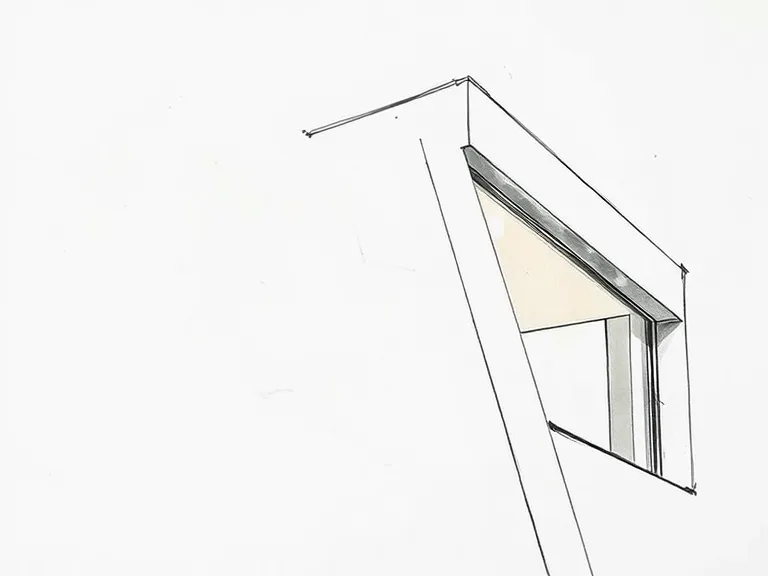
Angular forms
Sharp angles, diagonals and sloping walls.
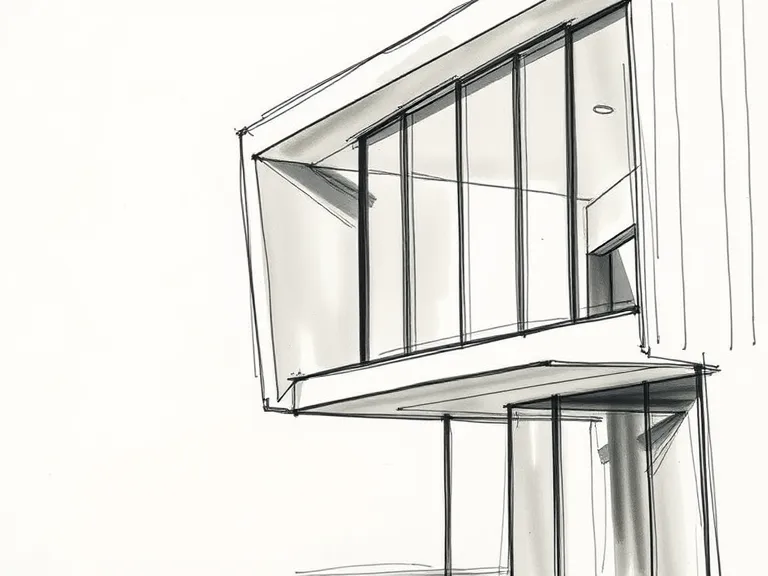
Metal cladding
Profiled metal sheeting and smooth panels.
Large glazing
Big areas of glass, sometimes tinted.
Sculptural massing
The house treated as a bold sculptural object.
Where you'll find it
- Mosman NSW
- Vaucluse NSW
- Toorak VIC
- Brighton VIC
- Peppermint Grove WA
On history.house so far: Mosman (1), Seaforth (1).
History and context
Late Modernism developed in the 1970s and 1980s as architects stretched modernist principles, using new cladding materials and structural techniques to create more expressive forms. In houses it appears mostly in architect-designed homes in well-off suburbs.
Late Twentieth-Century Late Modern homes on history.house
2 homes identified as Late Twentieth-Century Late Modern from their style analysis.

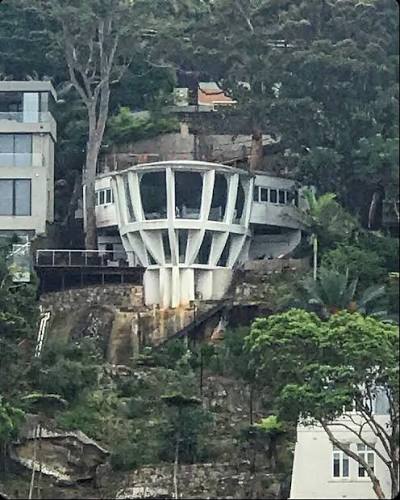
Style names and periods follow Richard Apperly, Robert Irving and Peter Reynolds, Identifying Australian Architecture (1989). Sketches are illustrations generated for this guide, not photographs of real houses.