Late Twentieth-Century Home Units
c. 1960–c. 1990 · Late twentieth-century flats period
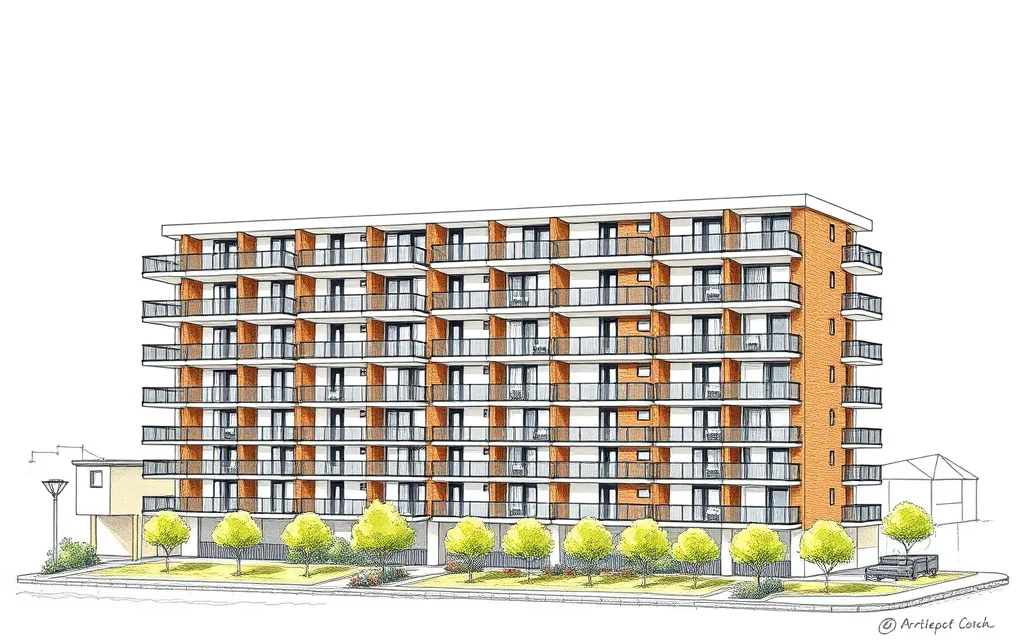
Strata-titled blocks of home units with lifts, from five-storey blocks to high-rise towers with balconies on every floor, built once strata title made flat ownership possible.
Description
'Home units' was the Sydney name for flats sold to owner-occupiers under the new strata title, as distinct from rented 'flats'. The type covers blocks with a lift, from five or six storeys to towers of twenty storeys or more, built on the harbour, along the beaches and around suburban centres.
Typical buildings have a concrete frame with face brick or rendered walls, continuous balconies with steel or glass balustrades, aluminium sliding doors and windows, and parking in a basement or under the building. Towers are often slab-shaped and set back from the street in landscaped grounds, with a lobby at ground level.
Key characteristics
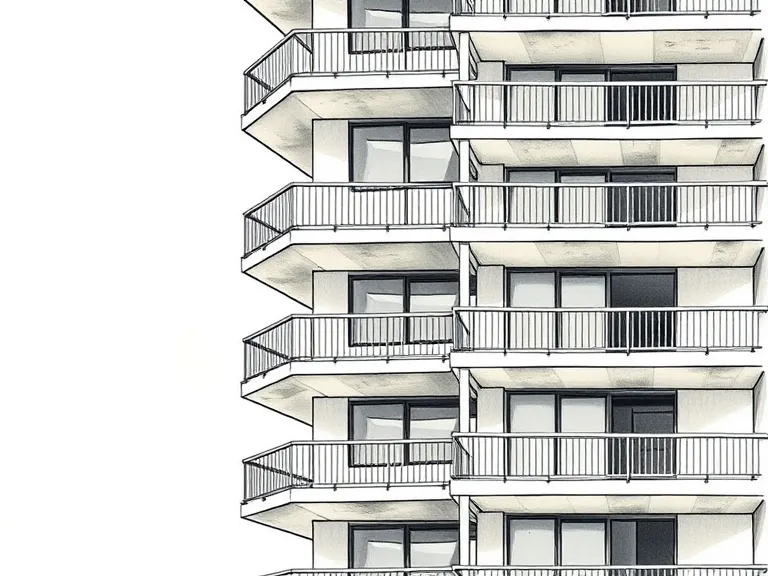
Continuous balconies
Balconies running across each floor, with steel, brick or glass balustrades.
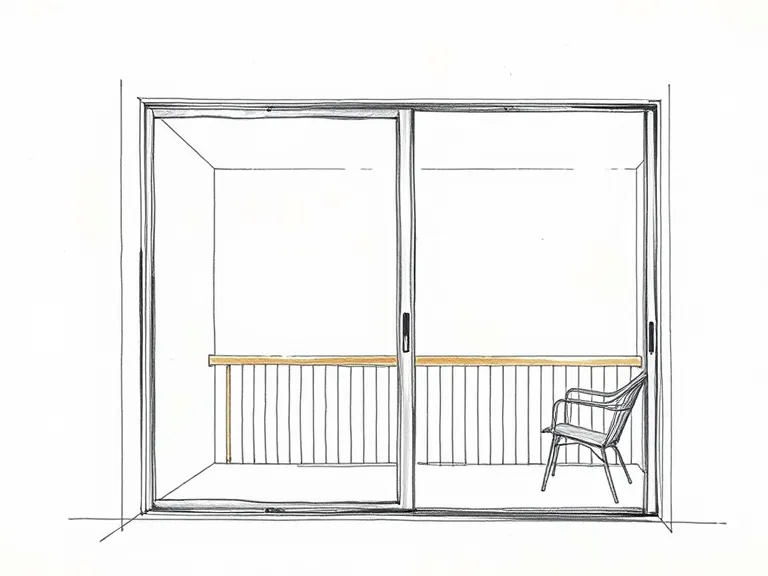
Aluminium sliding doors
Full-height aluminium sliding doors opening onto the balconies.
Concrete frame
A reinforced concrete frame with brick or rendered infill walls.
Lift and lobby
A lift and a ground-floor lobby with letterboxes and the building's name.
Parking below
Basement or under-croft parking reached by a ramp from the street.
Where you'll find it
- Kirribilli NSW
- Neutral Bay NSW
- Manly NSW
- Bondi NSW
- Cronulla NSW
- South Yarra VIC
- Surfers Paradise QLD
- Kangaroo Point QLD
History and context
The NSW Strata Titles Act 1961, often described as a world first, let people own a single flat in a building outright, with its own title. The other states passed similar laws over the following years, and buying a 'home unit' became a real alternative to buying a house.
A boom followed, especially in Sydney, where the harbour foreshores of Kirribilli and Neutral Bay and the beaches of Manly and Bondi were transformed in the 1960s and early 1970s. Concern over towers on the waterfront led to tighter height controls in the 1970s, and most later blocks are lower.
Late Twentieth-Century Home Units homes on history.house
No homes have been identified in this style yet. Identify your home's style from a photo, or search for an address.
Sources: Richard Apperly, Robert Irving and Peter Reynolds, Identifying Australian Architecture (1989); Waverley Council, Inter-War Flat Building Study and Design Guidelines; Charles Pickett, 'The six-pack: the past and present of walk-up flats' (Australia ICOMOS, 2009); Caroline Butler-Bowdon and Charles Pickett, Homes in the Sky: Apartment Living in Australia (2007). Sketches are illustrations generated for this guide, not photographs of real buildings.