Federation Arts and Crafts
c. 1890–c. 1915 · Federation period
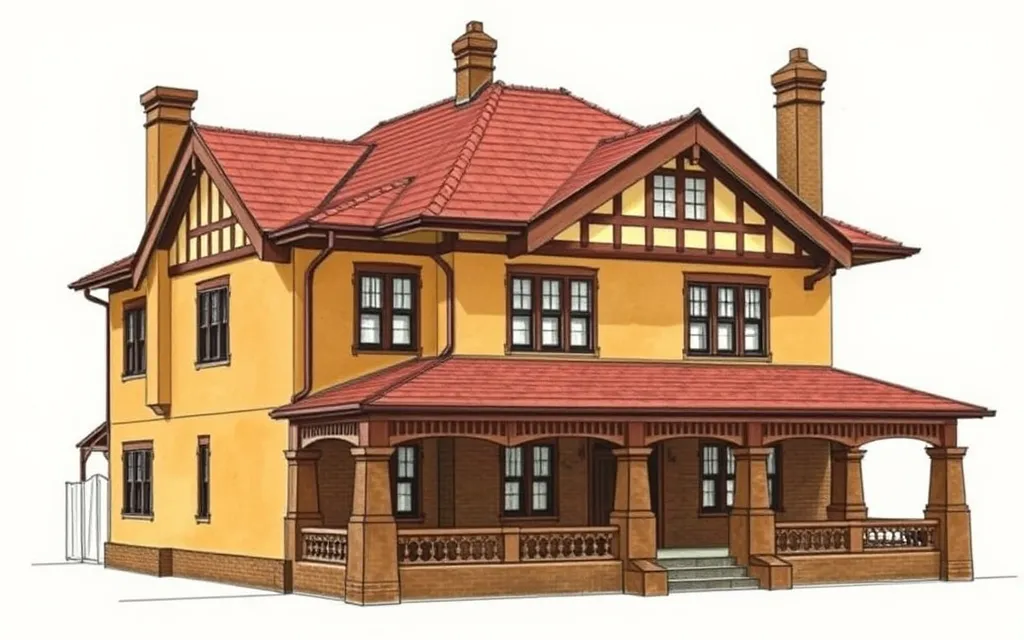
Informal houses with broad roofs, roughcast walls, tall chimneys and bands of small-paned casements, built with honest craftsmanship.
Description
Federation Arts and Crafts houses follow the ideals of the English Arts and Crafts movement: honest materials, good craftsmanship and comfortable, informal planning. They are quieter than Queen Anne houses, with fewer frills.
Typical features are broad roofs sweeping low over the walls, roughcast render (sometimes over a brick base), tall plain chimneys, and windows grouped in bands of casements with small panes.
Key characteristics
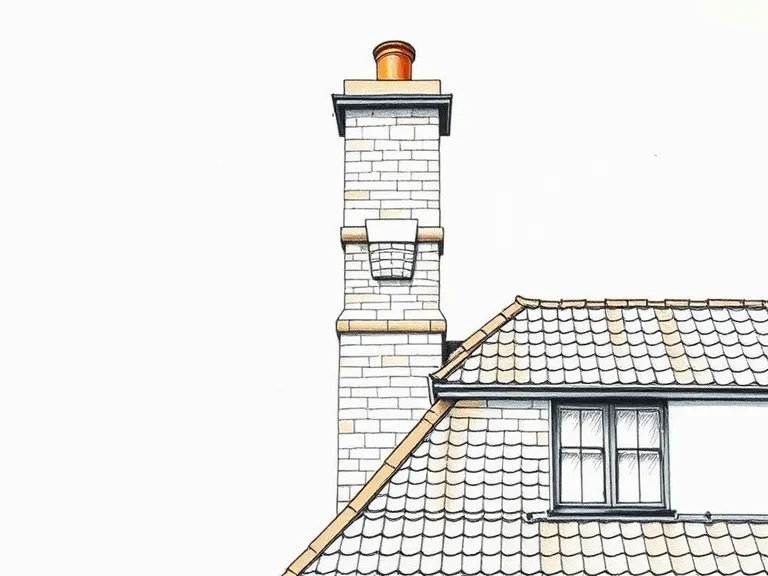
Roughcast chimneys
Tall, plain chimneys in roughcast render, often prominent on the roofline.
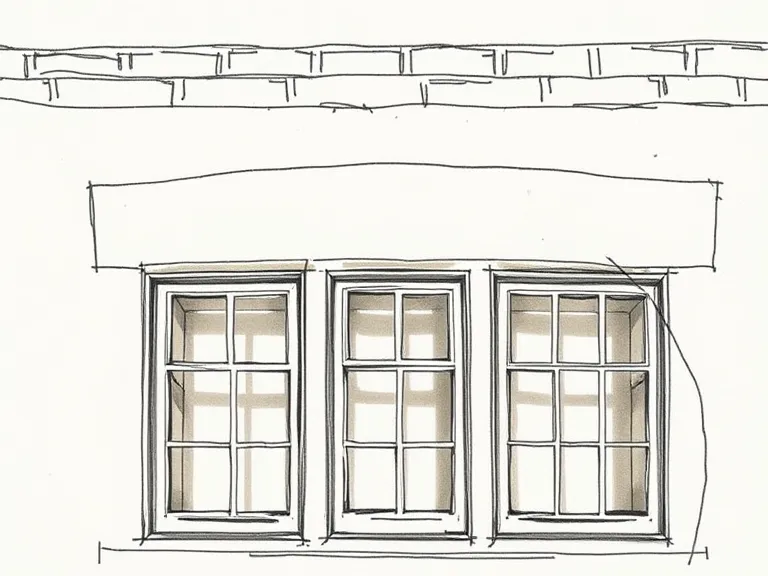
Banded casements
Windows grouped in horizontal bands of timber casements with small panes or leadlight.
Broad roof
A large, simple roof that comes down low over the walls, sometimes with eyebrow dormers.
Roughcast walls
Roughcast or pebble-dash render, often above a face brick base.
Squat piers
Short, solid brick or stone piers supporting the verandah or porch.
Informal plan
Rooms arranged around use and outlook rather than symmetry.
Where you'll find it
- Wahroonga NSW
- Killara NSW
- Turramurra NSW
- Pymble NSW
- Mosman NSW
- Neutral Bay NSW
- Eaglemont VIC
- Kew VIC
- Canterbury VIC
On history.house so far: Kurraba Point (1).
History and context
The Arts and Crafts movement began in England with William Morris and his circle, who rejected cheap machine-made ornament in favour of handcraft and simple, honest design. Architects such as C. F. A. Voysey designed houses with roughcast walls, big roofs and tall chimneys.
In Australia, architects including B. J. Waterhouse and Howard Joseland in Sydney, and Harold Desbrowe-Annear and Robert Haddon in Melbourne, adapted these ideas for the local climate. Desbrowe-Annear's houses at Eaglemont (c. 1903) are early examples.
Federation Arts and Crafts homes on history.house
1 home identified as Federation Arts and Crafts from their style analysis.
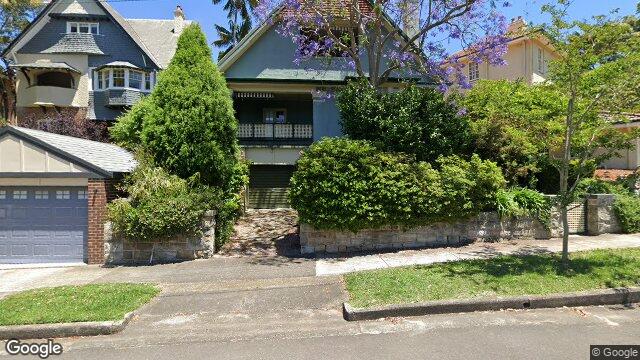
Style names and periods follow Richard Apperly, Robert Irving and Peter Reynolds, Identifying Australian Architecture (1989). Sketches are illustrations generated for this guide, not photographs of real houses.