Old Colonial Grecian
c. 1820–c. 1850 · Old Colonial period
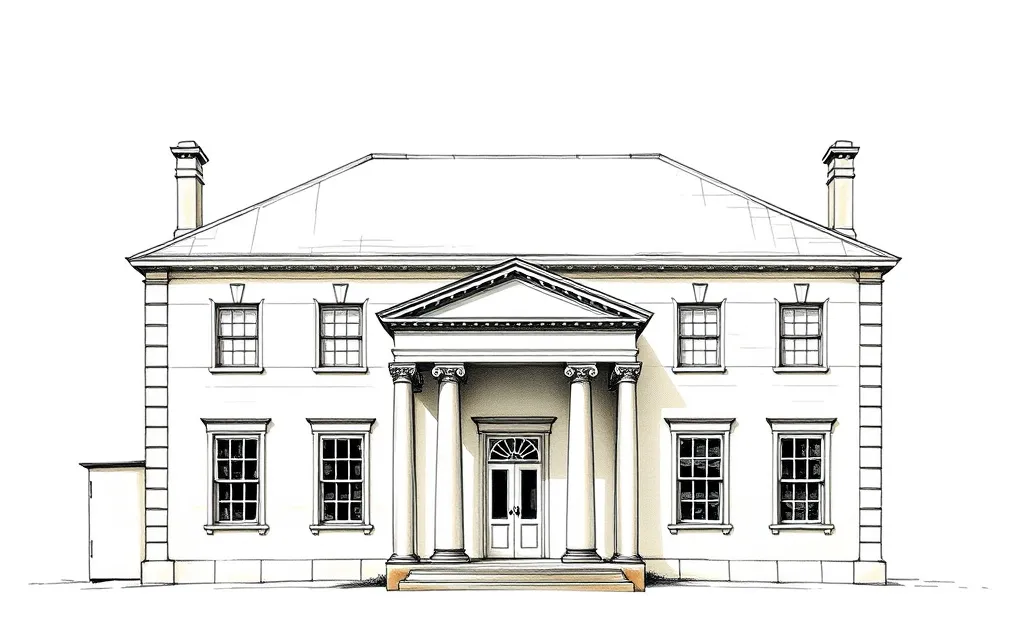
Severe, dignified buildings in dressed stone with Greek Doric columns and plain pediments, based on ancient Greek temples.
Description
Old Colonial Grecian buildings take their details from ancient Greek architecture, which British architects rediscovered in the late eighteenth century. The look is severe and dignified: plain dressed stone, simple Doric columns without bases, and low triangular pediments.
The style was used mainly for public buildings, churches and the larger houses, and its details often appear on otherwise Georgian or Regency houses as a Greek-style portico, door surround or column.
Key characteristics
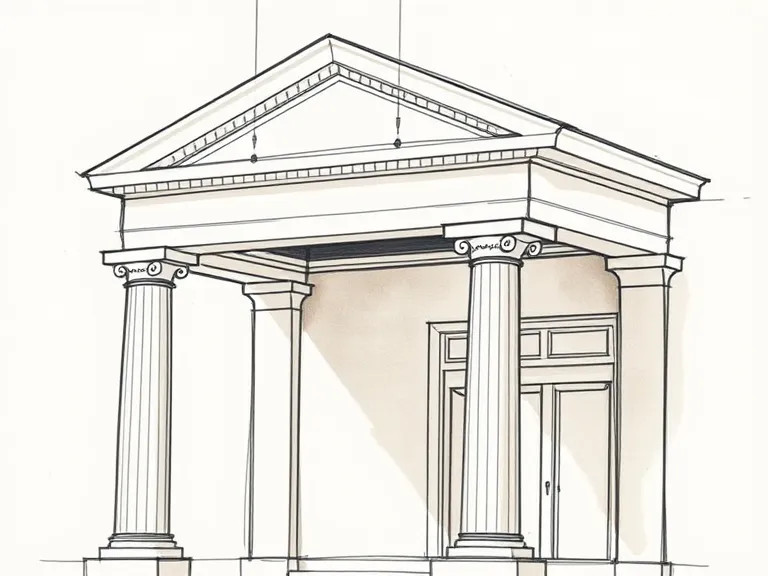
Greek Doric columns
Sturdy fluted or plain columns without bases, carrying a plain entablature, often as a front portico.
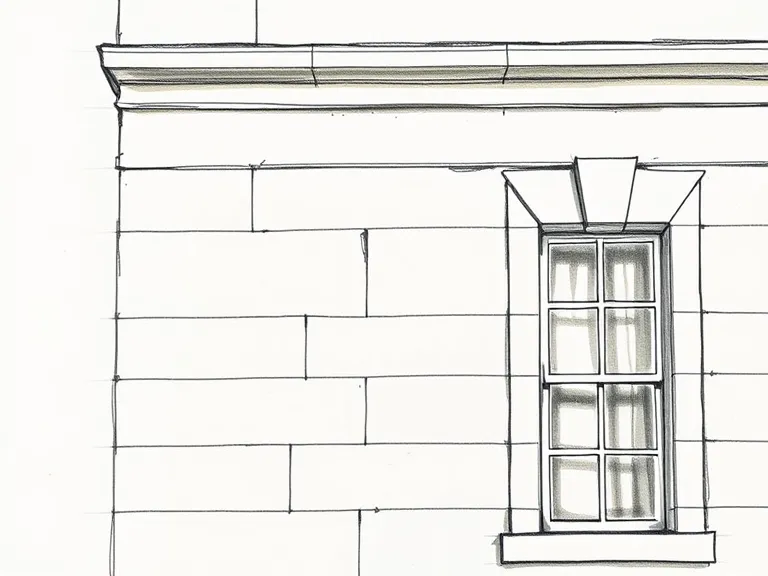
Dressed stone
Finely cut sandstone (ashlar) or stucco imitating it, with crisp joints.
Low pediment
A shallow triangular pediment over the portico or the centre of the front.
Parapet
A plain parapet that hides a low roof, giving a flat-topped, temple-like outline.
Symmetry
Strictly symmetrical fronts with regular, tall windows.
Where you'll find it
Grecian houses are rare. The style is easier to see on public buildings, such as Mortimer Lewis's Darlinghurst Courthouse in Sydney.
- Darlinghurst NSW
- Elizabeth Bay NSW
- Parramatta NSW
- Hobart TAS
- Launceston TAS
History and context
The Greek Revival spread through Britain after the publication of measured drawings of Athenian buildings in the late 1700s. In the colonies it suited government buildings that needed to look solid and permanent, and colonial architects such as Mortimer Lewis and John Verge used it for courthouses, churches and the porticos of large houses in the 1830s and 1840s.
Because it relied on skilled masons and fine stone, the Grecian style was expensive, and it was overtaken by the more decorative Victorian styles in the gold-rush years.
Old Colonial Grecian homes on history.house
No homes have been identified in this style yet. Identify your home's style from a photo, or search for an address.
Style names and periods follow Richard Apperly, Robert Irving and Peter Reynolds, Identifying Australian Architecture (1989). Sketches are illustrations generated for this guide, not photographs of real houses.