Old Colonial Gothic Picturesque
c. 1820–c. 1850 · Old Colonial period
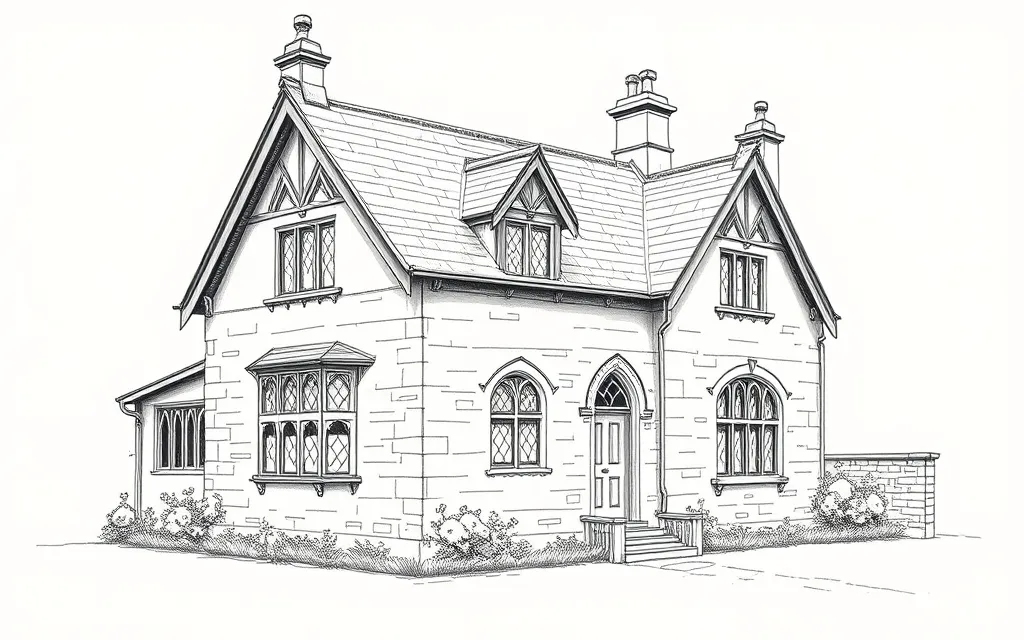
Romantic houses and cottages with steep gables, carved bargeboards and pointed windows, the colonies' first taste of the Gothic Revival.
Description
Old Colonial Gothic Picturesque houses belong to the early, decorative phase of the Gothic Revival. They aimed for a romantic, irregular effect rather than Georgian order. They borrowed medieval details such as pointed arches, battlements, steep gables and clustered chimneys and applied them to houses and cottages.
The aim was a 'picturesque' composition that looked well in a landscape, with the house seen from a carriage drive among trees. Details were often applied to a plain building rather than built into its structure.
Key characteristics
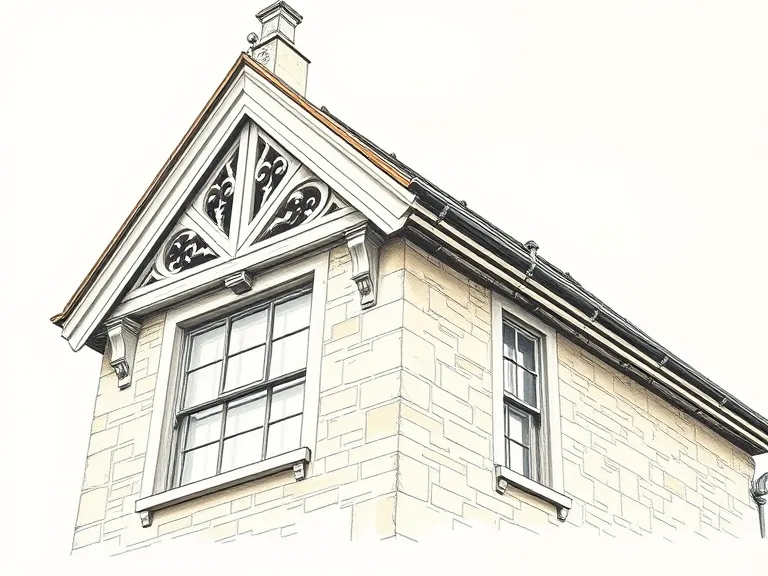
Carved bargeboards
Steep gables trimmed with pierced and carved timber bargeboards.
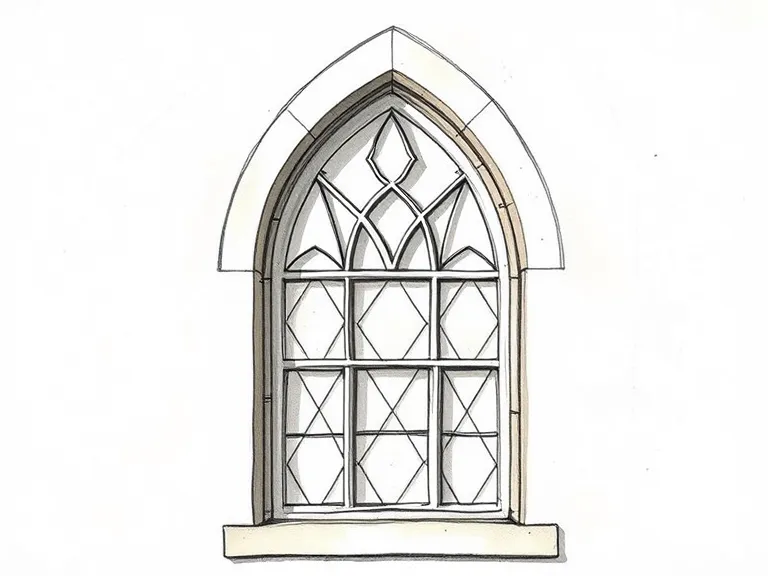
Pointed windows
Pointed (lancet) or Tudor-arched windows, often with diamond-pane or leaded glazing and hood moulds.
Irregular outline
Asymmetrical plans and roofs, with gables, bays and porches of different sizes.
Battlements and turrets
On larger houses, crenellated parapets, small towers and octagonal turrets.
Clustered chimneys
Tall chimneys grouped together, sometimes with decorative pots.
Where you'll find it
- Darling Point NSW
- Vaucluse NSW
- Sydney NSW
- Battery Point TAS
- New Town TAS
History and context
The Gothic Picturesque taste came from English country houses such as Horace Walpole's Strawberry Hill, and reached the colonies through pattern books of cottage and villa designs. Its best-known colonial example is Government House in Sydney (1837–45), designed in London by Edward Blore, and harbourside villas such as Carthona at Darling Point followed.
Vaucluse House in Sydney was given Gothic additions in the 1830s and 1840s by William Charles Wentworth. The picturesque approach of these houses led on to the more serious Victorian Gothic of the following decades.
Old Colonial Gothic Picturesque homes on history.house
No homes have been identified in this style yet. Identify your home's style from a photo, or search for an address.
Style names and periods follow Richard Apperly, Robert Irving and Peter Reynolds, Identifying Australian Architecture (1989). Sketches are illustrations generated for this guide, not photographs of real houses.