History of 2 Palmer St, Artarmon NSW 2064, Australia
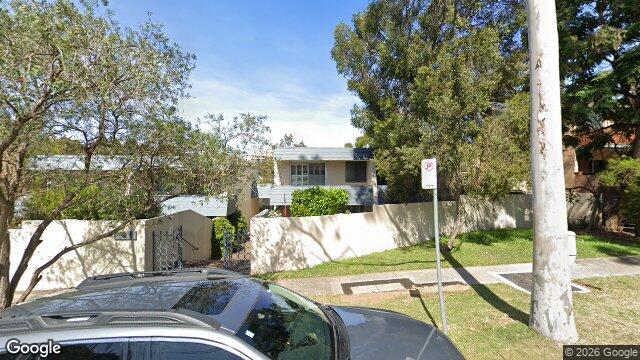
Google Street View
Architectural style
Overview
This appears to be a modest post-war suburban house, likely a single-storey dwelling with a simple, functional form and little ornament. Its clean lines, flat or very low-pitched roof, and restrained façade suggest a home built for practicality rather than display, with the current street presentation partly softened by later landscaping and boundary walls.
Likely build era
The house most likely dates to c. 1950s–1960s, with a possible tail into the early 1970s. That date range fits the low roof profile, plain rectangular massing, and minimal decorative detailing visible from the street. Homes of this period in Australia often used standardised construction methods, simpler plans, and larger windows to bring in light, reflecting the post-war shift towards efficient, affordable suburban housing.
Architectural style
The primary style is best described as Post-war Modernist / restrained mid-century suburban architecture, with some influence from the broader International Style simplified for everyday domestic use. Rather than the decorative timberwork, verandahs, and steep roofs of earlier Australian housing, this kind of house emphasised clean geometry, horizontal lines, and economy of form.
In practical terms, this style was about making a house look modern without making it expensive. It drew on modernist ideas of openness, light, and functional planning, but translated them into a suburban family home: straightforward structure, limited ornament, and a façade that reads as calm and efficient. In Australian suburbs, this often meant a house that sat low to the ground, used plastered or rendered walls, and relied on simple window openings and a modest roofline.
Style indicators
- Low, flat-looking roofline: strongly suggests post-war construction and a modernist influence, rather than Federation or Interwar styles.
- Plain façade with minimal ornament: the lack of decorative brackets, fretwork, or gables points to a mid-century functional approach.
- Rectangular, box-like massing: typical of post-war suburban houses designed for efficient planning and economical building.
- Large horizontal window openings: these suit mid-century ideas about light, ventilation, and a more open relationship to the street and garden.
- Rendered or painted exterior finish: common in the post-war period, when smooth finishes and simplified walls were popular.
- Set behind a low wall and garden: this is consistent with suburban planning of the era, where houses were often framed by front gardens rather than built tight to the footpath.
Historical context
Homes like this were built during a period of rapid suburban growth after the Second World War, when Australia faced strong population growth, rising home ownership, and pressure for affordable housing. New materials, standardised components, and more efficient building methods helped produce houses that were cheaper and faster to build than earlier, more ornamented homes. The result was a suburban architecture that valued practicality, light, and simplicity — ideals that matched the optimism and domestic focus of the post-war decades.
This kind of house matters because it shows the shift away from older, highly decorated Australian domestic architecture towards a more modern, everyday suburban language. Even when modest, these houses reflect changing ideas about family life, comfort, and progress: a home should be efficient, healthy, and adaptable, not just impressive from the street.