History of 4 Blamey Ave, Caringbah South NSW 2229, Australia
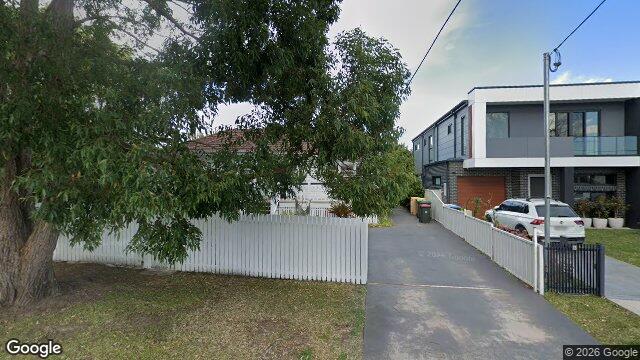
Google Street View
Architectural style
Overview
The house in the image appears to be a single-storey dwelling partially obscured by a tree. Its overall character suggests a modest, older suburban home, likely contrasted by the more modern structure visible to its right. The roofline and fence are indicative of a traditional style, possibly dating back several decades.
Likely build era
The house was likely built between c. 1940–1960. This estimation is based on the visible roof form and the style of the fence, which were common in mid-20th century Australian suburbs. Homes from this period often featured simple, functional designs with minimal ornamentation.
Architectural style
The architectural style is likely Post-war or Mid-century Modern, reflecting the economic and social conditions of Australia after World War II. This period was marked by a housing boom and a need for affordable, quickly constructed homes. The style often embraced simplicity and functionality, with a focus on horizontal lines and integration with the landscape.
Style indicators
- Roof form: The roof appears to be a simple gable or hipped style, common in post-war homes.
- Fence: The white picket fence is a traditional element that was popular in mid-century suburban housing.
- Single storey: Reflects the typical bungalow layout of the era, focusing on practicality and ease of construction.
Historical context
In the post-war era, Australia experienced significant population growth and urban expansion. The government promoted home ownership, leading to the development of new suburbs. Housing was designed to be economical and efficient, often using readily available materials and standardised designs. This period also saw the influence of modernist principles, which emphasised simplicity and functionality, shaping the suburban landscape and reflecting broader social changes towards modern living.
Confidence & caveats
The image is partially obscured by a tree, and the house is not fully visible, making it challenging to accurately determine its architectural style and era. The presence of a modern building nearby adds to the ambiguity of the context.