History of 161 Avenue Rd, Mosman NSW 2088, Australia
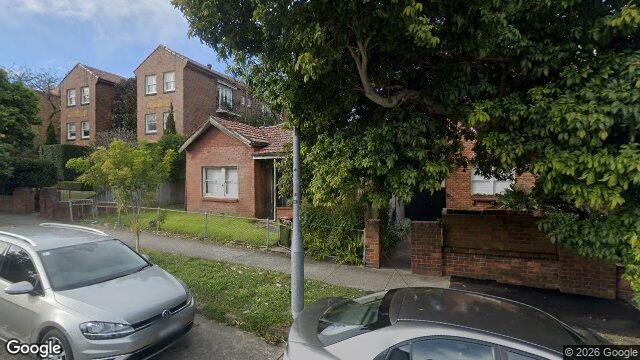
Google Street View
Architectural style
Overview
The house in the image appears to be a modest, single-storey brick dwelling with a simple gabled roof. Its overall character suggests a practical and functional design, likely intended for urban or suburban living. The style and materials hint at a mid-20th-century construction.
Likely build era
This house was likely built between c. 1940–1960. The use of brick, the simple gabled roof, and the straightforward, unadorned façade are characteristic of post-war housing in Australia. During this period, there was a focus on efficiency and cost-effectiveness in residential construction.
Architectural style
The house reflects the Post-war austerity style, which emerged in Australia during and after World War II. This style was influenced by the need for rapid and economical housing solutions due to material shortages and a growing population. The design prioritised functionality over ornamentation, with an emphasis on simple lines and minimal decorative elements.
This architectural approach was a departure from the more elaborate styles of the pre-war era, favouring practicality and affordability. It was common in suburban developments where the focus was on providing comfortable and efficient living spaces for returning soldiers and their families.
Style indicators
- Brick construction: The use of brick was typical for the period, offering durability and low maintenance.
- Simple gabled roof: The straightforward roof design reflects the functional priorities of the era.
- Minimal ornamentation: The lack of decorative features is consistent with the austerity style, focusing on simplicity and practicality.
- Single-storey layout: Common in post-war suburban developments, catering to family living.
Historical context
During the post-war period, Australia experienced a housing boom driven by population growth and the return of servicemen. The government and private developers aimed to address housing shortages with efficient, cost-effective designs. Advances in construction techniques and materials, such as mass-produced bricks, facilitated this rapid development. The resulting homes were often part of larger suburban expansions, reflecting the era's shift towards suburban living and the ideal of the nuclear family home. This house exemplifies the practical, unadorned style that characterised much of the mid-20th-century Australian residential architecture.
8 records about 161 Avenue Rd, Mosman NSW 2088, Australia, from 1935 to 23 September 2026.
Family notice at 161 Avenue Road, Mosman (1935)
A family notice was published giving 161 Avenue Road, Mosman as the associated address.
Source: Trove
Playtime winners at 161 Avenue Road, Mosman (1949, second notice)
A further Playtime competition-results notice includes 161 Avenue Road, Mosman among the listed addresses of winners.
Source: Trove
Playtime winners at 161 Avenue Road, Mosman (1949)
Competition results in the Playtime section list a winner residing at 161 Avenue Road, Mosman.
Source: Trove
Playtime cash awards at 161 Avenue Road, Mosman (1951)
The Playtime cash-awards results include a winner listed at 161 Avenue Road, Mosman.
Source: Trove
Playtime cash awards at 161 Avenue Road, Mosman (1951)
The Playtime cash-awards results include a winner listed at 161 Avenue Road, Mosman.
Source: Trove
Family notice at 161 Avenue Road, Mosman (1954)
A family notice published in 1954 gives 161 Avenue Road, Mosman as the associated address.
Source: Trove
NSW DA PAN-146013
Development application PAN-146013 lodged via the NSW Planning Portal.Status (as listed): DeterminedAuthority: CouncilAddress(es): 161 AVENUE ROAD MOSMAN 2088
Source: Linked source
CMA Sheet U1852-534 — page 1
NSW Historical Land Records Viewer (HLRV) — scanned land record located by Lot/DP for this property.
Source: Land records map