History of 10 Memorial Ave, Penrith NSW 2750, Australia
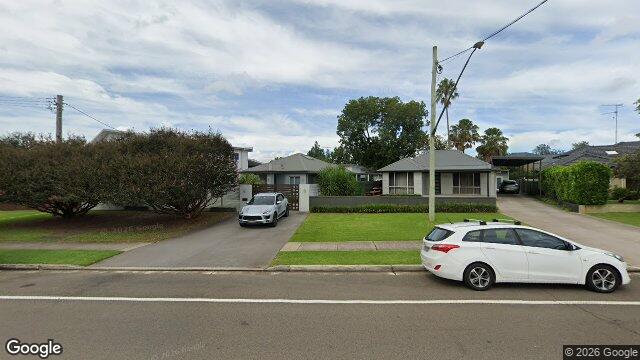
Google Street View
Architectural style
Overview
The house appears to be a single-storey, detached dwelling with a simple and modest character. Its overall appearance suggests a mid-20th-century build, likely reflecting post-war architectural trends. The house has a low-pitched roof and a straightforward, functional design.
Likely build era
This house was likely built around the 1950s to 1960s. During this period, Australian housing was influenced by the need for affordable and quickly constructed homes due to post-war population growth and urban expansion. The use of simple materials and minimal ornamentation was typical.
Architectural style
The architectural style is best described as Post-war Suburban. This style emerged in the mid-20th century, focusing on practicality and cost-effectiveness. It often featured simple, geometric forms and minimal decorative elements, reflecting a shift towards modernism and away from the ornate styles of earlier decades. The emphasis was on functionality and creating liveable spaces for families.
Style indicators
- Low-pitched roof: Common in post-war homes, allowing for easier construction and maintenance.
- Simple façade: Minimal ornamentation and straightforward design reflect the practical focus of the era.
- Single-storey layout: Typical for suburban developments during this time, catering to the growing demand for family homes.
- Rectangular windows: Functional and straightforward, aligning with the modernist influence of the period.
Historical context
During the 1950s and 1960s, Australia experienced significant social and economic changes, including a housing boom driven by returning servicemen and a growing population. The government promoted home ownership, leading to the development of many suburban areas. Advances in building technology and materials, such as pre-fabricated components, allowed for rapid construction. This era prioritised efficient, affordable housing solutions, resulting in the widespread adoption of the Post-war Suburban style, which prioritised practicality and liveability over decorative appeal.